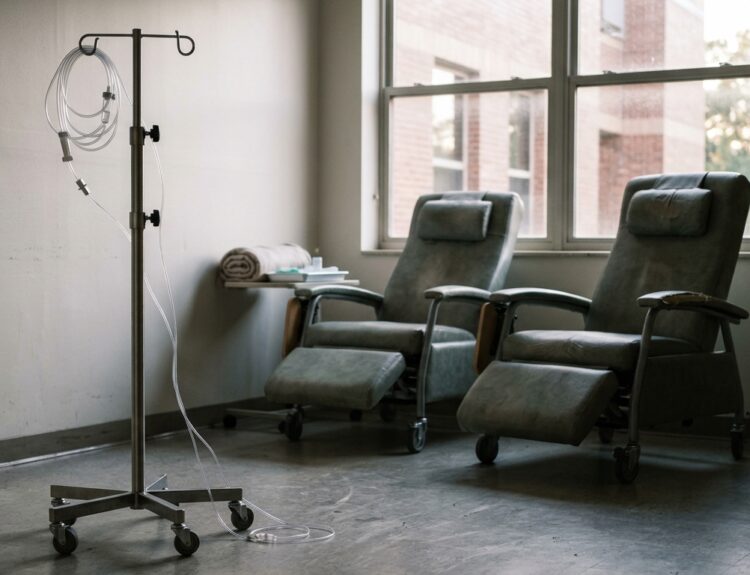
Picture a patient on trastuzumab deruxtecan, twelve weeks into treatment for HER2-positive metastatic breast cancer, reporting a dry cough through a smartphone eCOA app at 11 p.m. on a Tuesday. Her oncologist does not see the flag until Friday morning rounds. By then, the radiographic picture has shifted. The clinical team faces a choice: dose-reduce, delay, or discontinue. In a disease where T-DXd has redefined survival curves, that three-day gap between symptom and response may be the difference between continuing one of oncology’s most potent regimens and losing it permanently.
The TOP-REAL study is designed to close that gap. The international real-world evidence trial asks a precise operational question: can digital monitoring tools and eCOA technology detect toxicities early enough to keep HER2-positive metastatic breast cancer patients on treatment longer? The answer matters far beyond this single protocol, because it will stress-test whether DHT-enabled remote safety monitoring can carry regulatory weight in oncology.
The Discontinuation Numbers Nobody Talks About
Here is what the clinical trial community tends to gloss over when celebrating T-DXd’s efficacy data: in a real-world study of 93 patients with metastatic breast cancer treated with trastuzumab deruxtecan, 19.7% of HER2-positive patients discontinued the drug entirely because of adverse events. Not disease progression. Toxicity. And in a separate analysis of 300 HER2-low patients in US community oncology practices, interstitial lung disease and pneumonitis occurred in 10% of patients, with toxicity-related discontinuation running through the same population at a rate that reflects what clinicians see in practice rather than in a controlled Phase III protocol.
ILD is the signal that makes oncologists reach for the discontinuation form fastest. It escalates unpredictably. Grade 1 can become Grade 3 within days if the monitoring interval is monthly or tied to in-clinic visits. The blunt instrument of scheduled site assessments, fine for capturing tumor response every eight weeks, moves far too slowly for a pulmonary toxicity that evolves on a daily timescale.
This is the structural problem TOP-REAL is trying to solve. The question buried inside its protocol is not simply clinical. It is methodological: what does “early detection” actually require from a data infrastructure standpoint, and can eCOA tools capture symptom trajectories with enough granularity and speed to trigger an intervention before a Grade 2 toxicity grades up?
What the FDA Has Built and What It Has Left Unfinished
The regulatory scaffolding for this kind of study has been assembling for years, but it remains incomplete in ways that matter to anyone planning a submission. The FDA’s guidance on Conducting Clinical Trials With Decentralized Elements specifies that a trial monitoring plan must describe how monitoring will assess protocol compliance and data quality, including the frequency of review for trial records and source documents. That language is designed to accommodate remote and continuous monitoring architectures. But it stops short of telling a sponsor what an acceptable symptom-reporting cadence looks like for an ILD signal in an ADC trial, or how to weight patient-reported dyspnea against HRCT findings in a composite safety endpoint.
Meanwhile, the FDA’s draft guidance on Core Patient-Reported Outcomes in Cancer Clinical Trials, covered by Clario, establishes the conceptual framework for collecting PROs in oncology settings. But “conceptual framework” is exactly what it is. A sponsor who wants to use daily eCOA symptom diaries to support a safety claim in a real-world evidence study still faces a reviewer who can reasonably ask: how do you validate that a patient’s self-reported breathlessness score is a reliable early proxy for radiographically confirmed ILD? The guidance does not answer that question. TOP-REAL, by collecting both streams, may generate the evidence base that eventually compels the FDA to answer it.
The practical gap between guidance intent and operational reality is where most eCOA-enabled oncology protocols quietly fail.
Consider what the decentralized elements guidance envisions at a systems level versus what a site coordinator managing thirty T-DXd patients actually encounters. The guidance contemplates a monitoring plan that dynamically adjusts to patient risk. The site coordinator sees a patient portal generating daily eCOA entries, a data management team reviewing flags weekly, and a medical monitor who triages alerts on a schedule calibrated to other trials in their portfolio, not to the half-life of an ILD signal. The architecture exists. The human workflows that must translate digital data into clinical action have not been redesigned to match it.
The Algorithm Question the Industry Cannot Avoid
TOP-REAL’s design implicitly acknowledges a second problem that has been building pressure across oncology trial operations: the volume of continuous digital data that remote monitoring generates requires computational triage, and that triage is only as good as the detection logic underneath it. An AI-based large language model evaluated in a 2024 ASCO Post analysis demonstrated greater accuracy in detecting immune-related adverse events in cancer patients compared to standard ICD coding. The finding is directionally important: machine-assisted signal detection outperformed the administrative coding system that most safety databases rely on.
But LLM-based detection of irAEs in retrospective records is a considerably different task from prospective, real-time flagging of an eCOA-reported symptom pattern that precedes a confirmed ILD diagnosis. The first is a classification problem on retrospective records. The second requires the algorithm to operate on incomplete, longitudinal, patient-generated data, make a threshold call, and route that call to a clinician who must act within hours. No FDA guidance currently specifies how an algorithm should be validated specifically for use as a safety monitoring adjunct in a real-world oncology study; while general frameworks for AI/ML validation in clinical investigations and medical devices exist (e.g., FDA’s December 2023 digital health guidance and the 2026 FDA/EMA AI principles), none addresses this oncology-specific safety-monitoring use case directly.
TOP-REAL, by embedding digital monitoring tools into a prospective RWE framework, will generate a longitudinal dataset that could eventually ground that validation conversation. That is not a minor contribution. The study’s operational outputs, specifically the sensitivity and specificity of eCOA-reported symptoms as early toxicity signals against confirmed clinical endpoints, will give sponsors a reference architecture that does not currently exist in the published literature.
Which raises an uncomfortable question for any sponsor currently designing an ADC trial: how long can you rely on monthly clinic visits to catch a pulmonary toxicity signal that the data suggest evolves on a weekly or faster timescale? The 19.7% discontinuation rate in HER2-positive patients is not primarily a drug problem. It is a monitoring cadence problem dressed up as a clinical outcome.
What Sponsors and CROs Should Do Right Now
The operational takeaway from TOP-REAL’s design is specific enough to act on before the study publishes results. Any sponsor running a HER2-positive or HER2-low metastatic breast cancer trial with an ADC component should request a pre-submission Type B meeting with FDA to clarify what symptom-reporting cadence the agency will accept as adequate for real-time ILD monitoring, and whether daily eCOA data can substitute for or supplement scheduled radiographic surveillance in a safety monitoring plan. The decentralized elements guidance accommodates continuous monitoring architectures and supports sponsors who propose them; it does not give them the assurance that any particular architecture will satisfy a reviewer. That assurance requires the meeting.
CROs building the monitoring infrastructure for these trials face an equally concrete decision. The standard risk-based monitoring model, in which site visits are triggered by data anomalies detected during weekly or biweekly central monitoring cycles, does not align with the signal velocity of ILD in T-DXd patients. A monitoring plan calibrated for a weekly review cycle will, by design, lag behind the clinical reality. The revision required is architectural: eCOA platforms must be configured to route ILD-relevant symptom flags, specifically dyspnea, cough, and oxygen saturation below threshold, to a 24-hour medical monitor queue rather than the standard deviation-flagging pipeline used for efficacy endpoints.
That redesign is available today. Few CROs have built eCOA into their standard ADC monitoring playbook, in part because no FDA guidance has explicitly mandated the use of eCOA for ADC toxicity monitoring specifically, even though FDA’s 2024 ADC guidance does set expectations for proactive monitoring of class-effect toxicities. TOP-REAL may change both conditions simultaneously.
The patient who entered her cough into an eCOA app at 11 p.m. is still waiting for the clinical system to catch up to the data she generated. TOP-REAL’s most consequential output may not be a p-value. It may be the documented proof that the gap between her symptom and her oncologist’s response cost her a treatment she could have kept, evidence specific enough that the next sponsor cannot plausibly claim the monitoring architecture was adequate.
References
- PR Newswire, “TOP-REAL: Digital Monitoring for Toxicity Detection in HER2-Positive Metastatic Breast Cancer”
- MDPI Cancers, “Real-World Study of 93 Patients: T-DXd Discontinuation Rates in Metastatic Breast Cancer”
- Cancer Network, “Real-World Safety of Trastuzumab Deruxtecan in HER2-Low Metastatic Breast Cancer: US Community Oncology Practices”
- FDA, “Conducting Clinical Trials With Decentralized Elements” (Guidance for Industry)
- Clario, “FDA’s Core Patient-Reported Outcomes in Cancer Clinical Trials Draft Guidance”
- ASCO Post, “Can AI Tool Improve Detection of Immune-Related Adverse Events in Patients With Cancer?” (2024)

Moe Alsumidaie, MBA, MSF, is founder and Chief Editor of Vanguard Publications, which publishes Clinical Trial Vanguard, Pharma Vanguard and BullScope, and Head of Research at CliniBiz. He has two decades in clinical trial operations and data science, with earlier roles at Genentech, Abbott Vascular and Stanford University Medical Center, and is a guest lecturer in clinical trial sciences at Rutgers University.