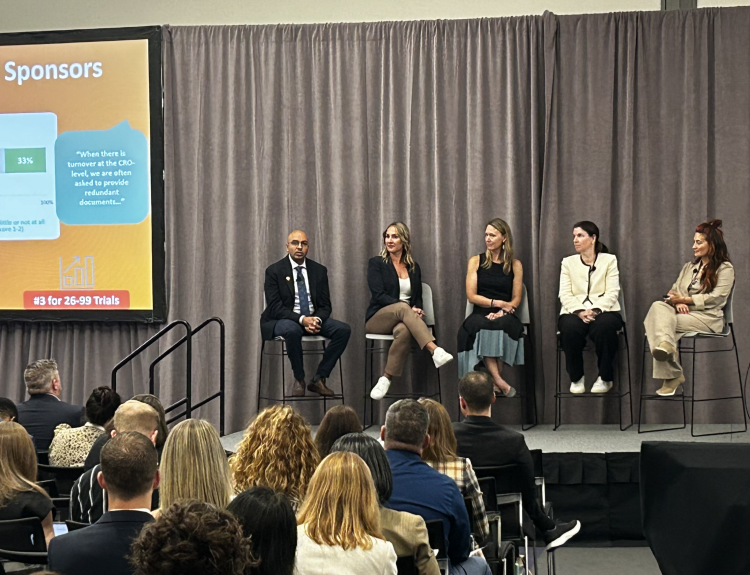
At the Veeva R&D and Quality Summit in Boston, we spoke with Bree Burks, Vice President of Strategy at Veeva Systems, about how technology has become both a cause and a cure for chaos at clinical research sites.
Drawing from her experience as a nurse and study coordinator, Burks described the human cost of fragmented technology—dedicated professionals burning out under the weight of managing multiple disconnected systems and repetitive data entry. She emphasized that this problem is solvable, urging sponsors and CROs to take responsibility for integration rather than pushing that burden onto sites.
Burks noted that while large sponsors have historically prioritized feature-specific tools, the industry is now shifting toward enterprise-level consistency, enabling sites to work within fewer, better-connected systems. She underscored the need for sponsors to listen to sites and recognize the growing complexity of site operations, where technology now shapes process and compliance.
When asked about balancing autonomy with standardization, Burks explained that innovation often emerges from simplicity—citing how initial resistance to standardization in regulatory document management ultimately led to efficiency gains and reduced monitoring burdens.
Finally, she expanded on her “three C’s” framework—Consistency, Connectedness, and Comprehensiveness—and added a fourth: Community. Building authentic collaboration between sites, sponsors, and CROs, she said, is key to ensuring progress and sustainability in clinical research.
This content is sponsored by Veeva Systems

Moe Alsumidaie is Chief Editor of The Clinical Trial Vanguard. Moe holds decades of experience in the clinical trials industry. Moe also serves as Head of Research at CliniBiz and Chief Data Scientist at Annex Clinical Corporation.