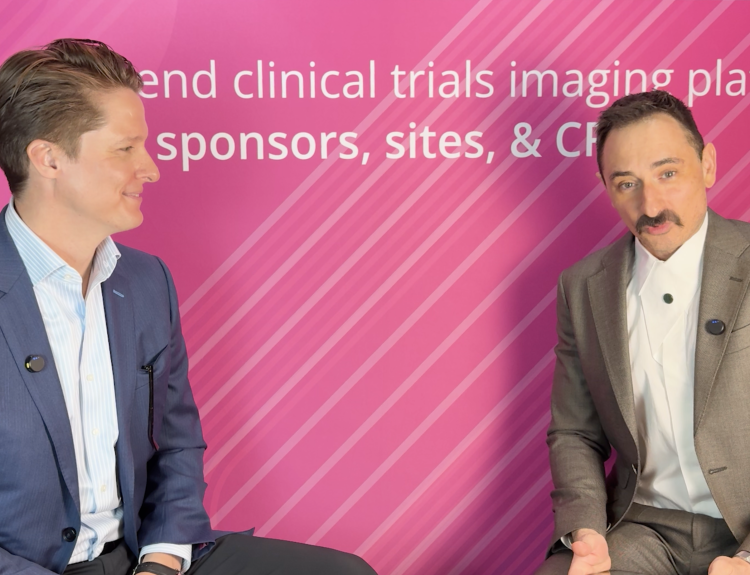
The clinical trial is over. The data is locked. And for most sponsors, that is where the imaging story ends. Olga Kubassova thinks that is exactly the wrong place to stop. As founder and CEO of IAG (Image Analysis Group), Kubassova has spent two decades building computational tools that extract meaning from medical images long after the last patient visit. Her current work with Ferring Pharmaceuticals applies AI-driven ultrasound biomarkers to fertility trials, where the gap between a controlled trial population and real-world clinical practice is wide, the outcomes are deeply personal, and the regulatory frameworks for AI in clinical research are still catching up with the science. In this conversation, Kubassova explains why IAG validated its Ferring proof-of-concept against real-world data rather than expanding the trial dataset, how imaging biomarkers earn credibility as intermediate endpoints for live birth rates, and what it actually looks like to scale a single-site AI pilot to a global rollout.

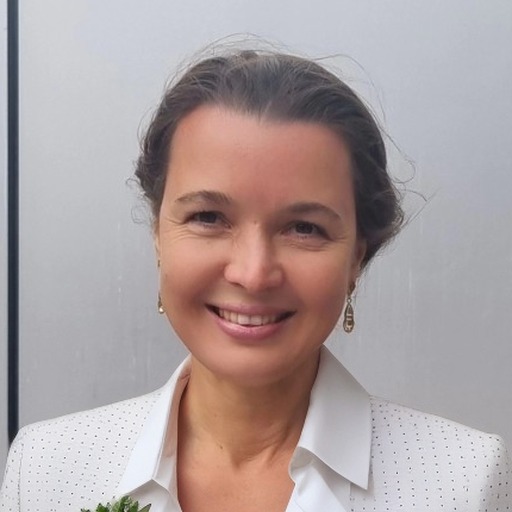
Founder and CEO, IAG (Image Analysis Group)
Moe: Why did IAG validate the Ferring proof-of-concept against real-world clinical data rather than expanding the trial dataset?
Olga Kubassova: Let me talk a little bit about the project itself. At the end of any trial, you have a set of patients who respond to the drug and a set who do not. Very often it is incredibly difficult to correlate baseline characteristics to those responses. Even if the drug is successful and you see statistical separation between the control group and the treatment group, you still have outliers, patients who for whatever reason do not respond. The same goes for placebo. So in this project, we wanted to understand whether there are baseline characteristics that would help us predict the likelihood of a patient’s response.
The trial was already finished, the data already collected, so expanding that database was not possible. But it was a great dataset to build a proof of concept on. Once we saw that the proof of concept was working, we ran quite a few tests, and we have a publication coming based on that work.
We also identified limitations. The trial database had only a single baseline time point per patient, and we were trying to understand how that single point connects to the outcome. By working with clinical sites on real-world data, we wanted two things: first, to see genuine real-world data rather than the more restricted trial population, and second, to bring in follow-up exams for these patients. So it is a slightly different database we are collecting now, and what we are trying to achieve is an expansion of our knowledge base from a single imaging point into multiple points, along with clinical outcomes. The next big step is to get this data, connect the trial data with the real-world data, retrain the model, and understand how it performs.
Moe: How does this kind of model extend into real-world evidence studies more broadly?
Olga Kubassova: When a pharma or biotech company completes a phase three trial, they are sitting on a sizable volume of data, and I think we are really under-using that data and those outcomes. We can use it to train an AI model, build those models, and then expand into real-world evidence studies. That is exactly what we are doing with a number of drugs right now. We are working with pharmaceutical and biotech companies who already have a database available and want to understand how that database could be useful in building real-world evidence.
Moe: How does IAG demonstrate to a fertility sponsor that an ultrasound imaging biomarker is a credible intermediate endpoint for live birth rates?
Olga Kubassova: It is a sophisticated imaging technique because we are not just dealing with an image, we are dealing with imaging biomarkers, digital biomarkers extracted from the image. We first need to segment the image into meaningful parts, the endometrium, the ovaries, and so on, and then analyze those physiological structures using texture analysis or similar approaches, where we can extract quantitative features from those parts of the image. Then you link the imaging findings to physical outcomes, including patient-reported outcomes and patient characteristics, through to live birth rates. That is how you demonstrate the connection.
After the first analysis predicting a successful outcome, the insight is that in a female cycle you can proceed with embryo implantation, or if conditions are not favorable, it is not a major step to postpone to the next cycle if your chances of pregnancy are higher. What makes this quite unique is that ability to provide someone with more certainty, or at least to highlight the risks. I think that will be extremely impactful in the real world.
Moe: How does regulatory ambiguity around AI in trials shape conversations with sponsors who need submission-ready imaging endpoints right now?
Olga Kubassova: Those regulations are mostly aimed at developers who are bringing AI tools into clinical practice. When you are targeting clinical practice deployment, you have a distinct pathway because you need to demonstrate that your AI tool works, that it is effective, that it is needed, and so on. Here we are talking about clinical trials and real-world evidence, so the pathway is slightly different, as are the requirements.
A database like the one from Ferring is already compliant, standardized, and available because it comes from a clinical trial. The next step is to build the requirements, and for any AI methodology those requirements center on correspondence to ground truth, what is the ground truth versus the AI outcome, and on reproducibility. We work within the guidelines for building any AI or automation within the clinical trial space, and those guidelines are clearly defined. Before placing anything into clinical trials, you also have to go through a number of dedicated steps to validate the software, or the parts of the software, that will be used to determine the impact on the drug or on patient safety.
Moe: What does it look like from a principal investigator’s perspective when AI imaging actually changes a treatment decision?
Olga Kubassova: When we built the first proof of concept, we were doing it with a small team, mainly the sponsor team and our team. We were thinking about how this actually works in practice, and then you bring it in front of investigators and the response could be anything. It could be very positive, or it could be: I really do not need this.
In the Ferring case, we had a great response. It is of course a real challenge because fertility is a very private issue, very personal, and sometimes embarrassing, so you need to be very mindful. But investigators who work in this space are very passionate about their patients, they know their patients. The reaction we had was extremely positive and extremely supportive. I think it is also a kind of sign of hope that you will be able to enable better outcomes.
Moe: Why does a successful pilot so often stay at the pilot stage, and what does it take to move beyond it?
Olga Kubassova: Ferring is not the only project we run for a large pharmaceutical company. To talk about the pilot-to-rollout question, I will use a project that is at a more advanced stage. We have another partner, Takeda Pharmaceuticals, and with them we have gone through the whole path from pilot to global rollout.
The project is focused on gastroenterological drug performance. We believe the effect of the drug is on mucosal healing, and you see resolution in the number of neutrophils and changing cells in a histology scan taken from the GI tract. Our pilot was just a few images from a single center, working with one investigator, testing whether the idea was feasible, but with a very limited database.
Once we saw that we could build something, our first step, what we call a pilot rollout, went to eight sites. All eight clinical sites contributed forty images to the project. That allowed us to collect images from dispersed locations and different scanners, and to refine the model. Moving from a single-center pilot to an eight-center pilot rollout really let us test the model, examine engagement, and see how it worked in practice. Following that, we rolled out the full AI to a much broader number of sites worldwide.
The paper covering that whole journey, from first pilot to global rollout, is coming out. The impact is not just building the methodology and the algorithm. It is also the global engagement of sites, investigators, and sponsors, and that engagement stays with you for a long time. Anything you build within a pilot really needs to find real-world applicability, because otherwise pilots stay at a very initial stage. It is expensive, but if you are building something worthwhile, it will bring back the ROI.
Dr. Olga Kubassova is founder and CEO of IAG (Image Analysis Group), a medical imaging and AI analytics company specializing in clinical trial endpoints and real-world evidence.

Moe Alsumidaie is Chief Editor of The Clinical Trial Vanguard. Moe holds decades of experience in the clinical trials industry. Moe also serves as Head of Research at CliniBiz and Chief Data Scientist at Annex Clinical Corporation.