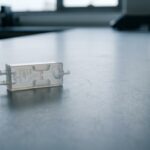

A 26% reduction in infarct size, measured by CK-MB area-under-the-curve, is not an incremental improvement in a crowded field. It is a statistically significant signal (p < 0.001) from a 154-patient randomized controlled trial that may reopen one of cardiology’s more contentious debates: whether mechanical thrombectomy belongs in the standard STEMI workflow. The NATURE trial, presented as late-breaking science at ESC Congress 2026 in Munich, met its primary endpoint evaluating Vesalio’s enVast Coronary Clot Retriever against conventional primary PCI alone in STEMI patients with large thrombus burden.
The design matters as much as the headline number. NATURE enrolled 154 patients across 11 centers in a prospective, two-arm randomization, targeting a precisely defined population: STEMI with large thrombus burden, a subgroup that has historically driven the worst reperfusion outcomes and the highest procedural complication rates. The primary endpoint was infarct size by CK-MB AUC, not a composite of softer clinical events. A secondary cardiac MRI endpoint at day three showed a 25% relative reduction in infarct size as a percentage of left ventricular mass, directionally consistent with the primary read. On the safety side, the enVast arm recorded zero strokes and zero deaths at 30 days, against 1.3% and 2.6% respectively in the control group, and total MACE came in at 1.3% versus 3.8%. These are small absolute numbers from a small trial, and they should not be over-interpreted, but they are not a red flag either.
The strategic context requires care. Routine mechanical thrombectomy in STEMI was largely abandoned after large trials showed no benefit in unselected patients. Vesalio’s thesis is that the failure was one of patient selection, not of the concept itself, and NATURE was built to test that thesis in the large thrombus burden subset specifically. The enVast device holds FDA 510(k) clearance for mechanical thrombectomy in the cardiac circulation and CE marking dating to December 2021, so regulatory access is not the bottleneck. Physician adoption and guideline incorporation are.
The single marker worth tracking now is whether the NATURE dataset is sufficient for a formal guideline consideration process at ESC or ACC/AHA, specifically in the large thrombus burden subgroup. A trial of 154 patients, however clean its signal, sits below the threshold most guideline committees require for a Class IIa or higher recommendation. Vesalio’s next move almost certainly involves a larger confirmatory study or a patient-level meta-analysis, and how quickly that design is registered will determine whether NATURE becomes a landmark or a proof-of-concept footnote.

Jon Napitupulu is Director of Media Relations at The Clinical Trial Vanguard. Jon, a computer data scientist, focuses on the latest clinical trial industry news and trends.