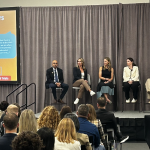
At the Veeva R&D and Quality Summit in Boston, Moe Alsumidaie interviewed Jeff Sorenson, CEO of Yunu, and Steve Tolle, Chief Product & Technology Officer at Ignitedata, on how the updated ICH E6(R3) guidance is transforming imaging in clinical trials. The discussion highlighted that imaging assessments have historically lacked true auditability, with studies showing error rates as high as 25–50%, often due to misapplied formulas or incorrect criteria. The new guidance calls for end-to-end traceability, ensuring that lesion measurements, pixel data, and protocols are fully aligned and verifiable. Sorenson and Tolle emphasized how technology can address these gaps, enabling imaging data to be directly tied to its source and reducing manual burdens on sites and sponsors. With regulators now requiring stronger oversight, sponsors must adopt technology-driven workflows to ensure compliance, accuracy, and patient safety. Looking ahead, automation will streamline much of the imaging process, while human expertise will remain central to patient communication and regulatory decision-making. Both leaders agreed that the R3 update represents a pivotal call to action: trustworthy imaging workflows are no longer optional but essential for the future of clinical trials.
Sponsored by Yunu

Moe Alsumidaie, MBA, MSF, is founder and Chief Editor of Vanguard Publications, which publishes Clinical Trial Vanguard, Pharma Vanguard and BullScope, and Head of Research at CliniBiz. He has two decades in clinical trial operations and data science, with earlier roles at Genentech, Abbott Vascular and Stanford University Medical Center, and is a guest lecturer in clinical trial sciences at Rutgers University.