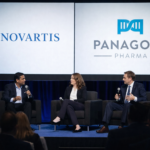
At the Panagora Clinical Trial Innovation Summit 2025 in Basel, Adam Petrich, Chief Medical Officer of QuantHealth, presented a case for AI-driven trial simulation as a practical tool for reshaping drug development outcomes. The session focused on how predictive modeling can intervene before trials fail — not just explain why they did.
The Problem: Predictable Failure Without Actionable Insight
Less than 10% of drugs entering the clinic ever reach regulatory approval. The QuantHealth representative framed the real question not as why trials fail, but which failures could have been avoided.
The platform addresses four specific intervention points: accelerating timelines, reducing trial costs, improving probability of technical success, and increasing peak sales. These categories often overlap, but each represents a distinct lever sponsors can pull during development.
The technology combines three core components. A biomedical knowledge graph places investigational drugs in biological context. Licensed real-world datasets, calibrated against randomized clinical trial data, provide population-level grounding. A simulation engine built on large healthcare models then predicts how individual patients will respond to investigational therapies.
Validation in Practice: From Prediction to Population Enrichment
The QuantHealth presenter shared prospective predictions across cardiometabolic outcomes — including weight loss thresholds and HbA1c reduction — generated before any public results were available. The platform showed high accuracy predicting both quantitative outcomes and binary success-or-failure results across GLP-1-dominated trials.
A head and neck squamous cell carcinoma trial illustrated how prediction translates into action. The platform accurately forecast the hazard ratio and two-year event-free survival. A subsequent analysis identified that HPV status, tumor anatomic location, and PD-L1 expression were key drivers of outcome. Restricting enrollment based on those variables would have produced a more meaningful efficacy signal.
In a separate ARDS trial, a sponsor came with existing eligibility criteria producing a positive but underpowered result. QuantHealth recommended expanding eligibility and revising the primary endpoint. After the sponsor modified the trial design accordingly, projected savings included reductions in participant numbers, timeline, and ultimately a stronger efficacy demonstration.
For probability of technical success, the platform uses Monte Carlo simulation across patient populations orders of magnitude larger than a typical trial sample. In one oncology example, 81% of simulations fell below the critical hazard ratio threshold of 0.75. In a hormone-positive breast cancer trial, simulating a biomarker-selected subpopulation versus intent-to-treat showed substantially higher probability of technical success in the biomarker group. This directly informed enrollment minimums and alpha allocation strategy for the sponsor.
Regulatory Engagement: Early Signals from FDA and EMA
The FDA has issued guidance encouraging early modeling interactions, though the QuantHealth presenter noted this guidance remains relatively vague in practice. The company has already tested the boundaries of that framework directly.
In a written interaction submitted to both the FDA and EMA on behalf of a sponsor, QuantHealth proposed using simulated radiographic changes from an observational trial to support early regulatory decisions while waiting for observed outcomes. Both agencies responded encouragingly. The condition they set: independent prospective validation in a separate dataset, with data locked and escrowed in advance.
That validation process will take years. But the presenter positioned it as the critical path toward a future where in silico trials can support smaller, faster studies — with regulators potentially accepting relaxed p-value thresholds backed by digital accompaniment.
Outlook: Modest Gains, Large Returns — and a More Inclusive Trial System
The financial case for incremental improvement is straightforward. Using a phase 3 oncology trial with a $250–300 million budget and projected peak-year sales of $180 million, a 5% improvement across key development indices compounds significantly over a drug’s lifecycle. Every day gained before loss of exclusivity has measurable value.
The presenter also flagged a longer-term goal: making eligibility criteria less of a blunt instrument. Many patients are excluded from trials for marginal lab derangements — slightly elevated creatinine, AST, or ALT — that likely have no meaningful impact on efficacy or safety. The argument was direct: current criteria select for the healthiest possible patients, not necessarily the most representative ones.
The near-term vision involves site-level bespoke analyses, matching patients to specific trials based on predicted benefit-risk profiles rather than broad categorical cutoffs. That capability is still in development. But as regulatory acceptance of validated simulation models grows, the gap between predictive modeling and actual trial decision-making is expected to narrow within the next several years.

Moe Alsumidaie, MBA, MSF, is founder and Chief Editor of Vanguard Publications, which publishes Clinical Trial Vanguard, Pharma Vanguard and BullScope, and Head of Research at CliniBiz. He has two decades in clinical trial operations and data science, with earlier roles at Genentech, Abbott Vascular and Stanford University Medical Center, and is a guest lecturer in clinical trial sciences at Rutgers University.