
Vice President of Digital, Data and IT, AOP Health
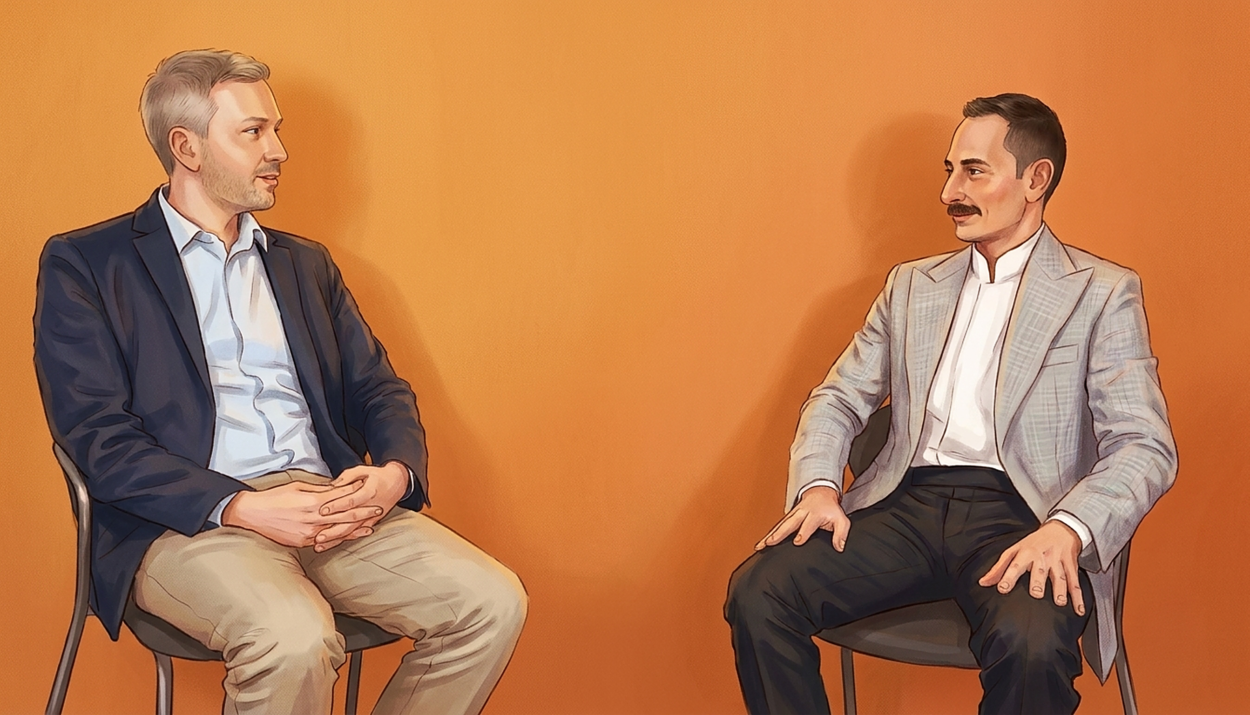
The pressure on life sciences CIOs to “deliver AI” is real — and, according to Bernhard Seiser, largely misplaced. As Vice President of Digital, Data and IT at AOP Health, a specialty pharma company focused on rare disease and critical care, Seiser has spent the past several years doing something less glamorous but arguably more consequential: advancing the replacement of a fragmented and partially paper-based application landscape with a more unified industry cloud approach across clinical, quality, safety, and commercial functions. At the Veeva R&D and Quality Summit in Copenhagen, he sat down with Vanguard to explain why the foundation has to come before the ambition — and what CIOs get wrong when they skip that step.

Moe: Why did AOP Health move to standardize on a single platform rather than continue building out individual systems?
Bernhard Seiser: One of the main reasons for adopting the industry cloud was that we are growing, and that requires scalability. With a fragmented IT landscape, where you need to establish all your integrations yourself, you lose a lot of speed and become inefficient. The industry cloud solves that. Ultimately, it helps us move faster and more efficiently towards our core goal: developing medical solutions for patients with high unmet medical needs.
Moe: How many systems were running across clinical, quality, and commercial before consolidation?
Bernhard: That’s a difficult question to answer in full transparency, because in some areas, processes were not yet supported by a dedicated modern system. Some processes were paper-based. I think that helps you understand why we moved toward an industry cloud: we wanted to modernize our ways of working and reduce operational complexity. What we’re going to do now is deploy 13 capabilities or applications across the different functional areas.
The principle behind this is: simplify to scale. Standard platforms and processes help us reduce complexity, improve compliance and audit readiness, and establish a more robust digital foundation for AOP Health’s continued growth.
Moe: How did the move away from paper-based safety case management change things in practice?
Bernhard: Safety cases were one of the most critical areas to address. We had a partially paper-based approach, and then also a more legacy system-driven setup. With the industry cloud, we now have an end-to-end case management solution in place, which helps a lot and strengthens process control, traceability, and compliance readiness.
“Every cloud deployment had to demonstrate either clear business impact or meaningful transformational potential.”
Moe: How did you justify the investment internally?
Bernhard: There were multiple factors, but they’re difficult to quantify. Take compliance — how do you put a value on that? In our industry, maintaining and strengthening compliance is non-negotiable, so you can’t really attach a number to it. We did conduct a thorough investigation around the total business case, evaluating area by area whether each deployment would have business impact or at least transformational potential. In all the cases when we deployed something to the cloud, it has.
Moe: How long did it take from strategic decision to first cloud in production?
Bernhard: We started by deriving a digital strategy, which I think is really critical — having a strategic plan for how you want to move forward. That took some time. I’d say we spent close to half a year to a year understanding where we needed to be from a digital foundation perspective. But then we moved quite quickly once the C-level decision came through. Getting approval, getting the budget, and moving to the first implementation took only two months. That said, we also had some risks that needed to be mitigated as soon as possible, which contributed to the urgency.
Moe: Why does the digital strategy have to come first — what does it need to address that a standard implementation plan doesn’t?
Bernhard: You need a good understanding of how your business operates — not just as it is when you’re deriving the strategy, but where it wants to be. So you need to look at the capabilities you want to establish or evolve, and — this is the critical piece — not just in terms of technology, but also in terms of the processes and the data you want to integrate. That’s the foundation you require. Then it’s about identifying a strong team and building a team around a program. Because initiatives like this should not be seen as a rollout of individual applications. They should be done comprehensively through one well-governed program.
Moe: How has the experience of running this initiative been, given that it’s happening in parallel with an ERP rollout?
Bernhard: My experience has been very good so far. We’re progressing well. But it’s not a small program — and running a similar initiative on top of an ERP rollout is a big burden for the organization. How I see it, that can all be achieved through having the right partners in place, and I think we do have the right partners in place to help make this journey a success.
Moe: How do you think about the partner model — internal versus external?
Bernhard: We see it as threefold. You need the internal stakeholders, and their full commitment. You need a strong software supplier — or going further, an implementation partner. And potentially someone with broader business understanding who can help where needed. We’re not a big organization, so sometimes we need external support on top of that.
“You cannot deliver on the AI promise if you don’t have the right foundation in place — a solid IT infrastructure, application landscape, and well-structured data.”
Moe: Why can’t CIOs skip straight to AI if the business is asking for it?
Bernhard: I know the pressure CIOs are under — they’re being asked by C-level to deliver AI as quickly as possible. But I think they know they cannot deliver on that promise if they don’t have the right foundation in place. That means a solid IT infrastructure, a coherent application landscape, and well-structured data, because that’s the foundation for AI. The message I’d recommend CIOs give back to their CEOs is: you need to have a solid foundation in place in order to do AI right.
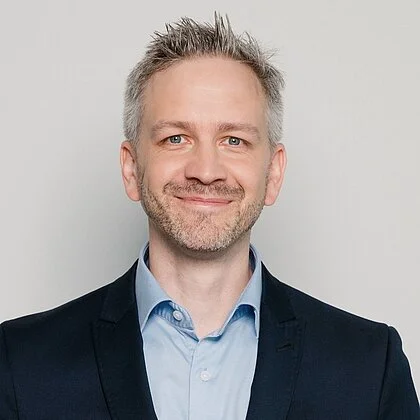
Bernhard Seiser is Vice President of Digital, Data and IT at AOP Health, a specialty pharma company focused on rare disease and critical care therapeutics.
This content is sponsored by Veeva Systems.

Moe Alsumidaie is Chief Editor of The Clinical Trial Vanguard. Moe holds decades of experience in the clinical trials industry. Moe also serves as Head of Research at CliniBiz and Chief Data Scientist at Annex Clinical Corporation.