When Boehringer Ingelheim went live with multiple Veeva Vaults simultaneously in 2025, the pharma world took notice. The "big bang" consolidation became one of the defining reference stories of that year's industry conversation. But the One Medicine Platform vision was never just about Vault consolidation. Site payments — the unglamorous, cross-departmental, multi-country infrastructure that determines whether sites get paid on time — was always part of the destination. It just required its own journey.
At the 2026 Veeva R&D and Quality Summit in Copenhagen, Sarita Thomas, Product Manager for the One Medicine Platform at Boehringer Ingelheim, sat down with Vanguard to discuss what it took to bring invoice management in-house across 100 trials, 9,000-plus sites, and 45 countries — and why the absence of a single system had been costing the organization more than it realized.

Moe: Why did site payments require its own phase rather than launching with the initial vault consolidation?
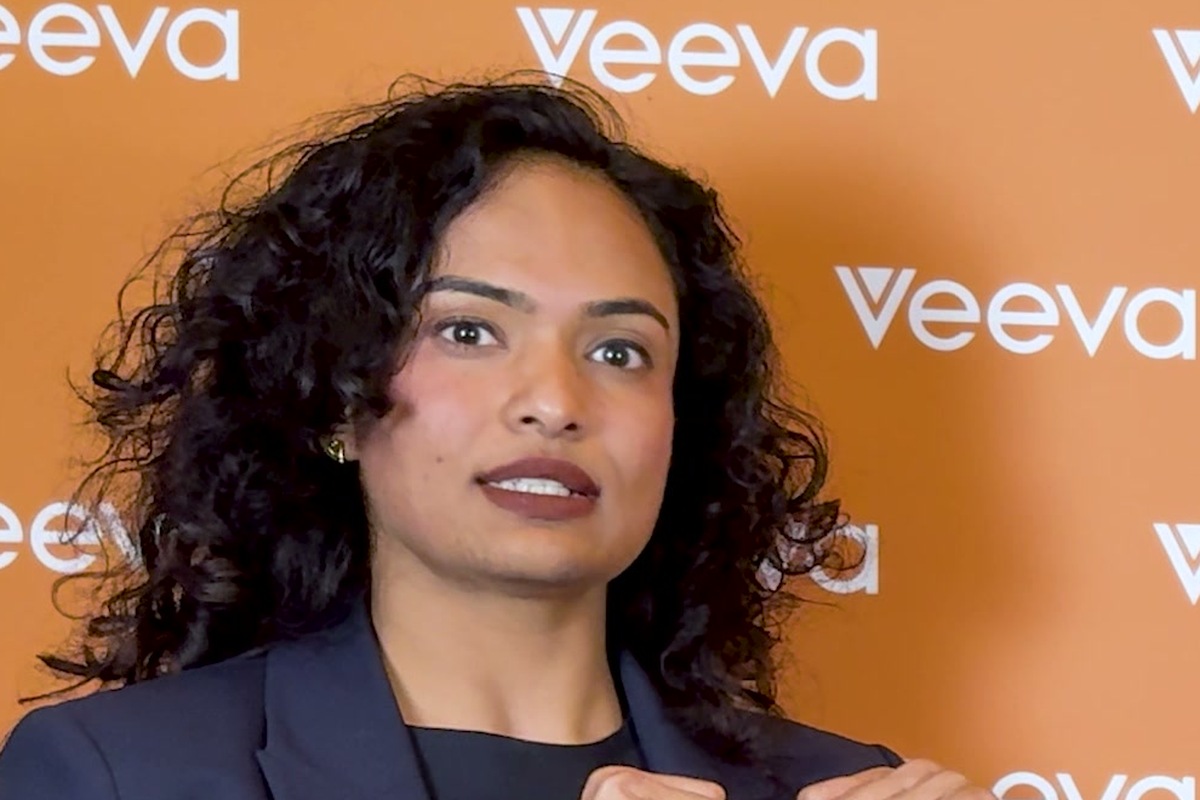
Sarita Thomas: Boehringer had a simple yet bold vision: One Medicine Platform — an end-to-end, seamless flow of data. The Veeva platform is an integral part of that journey. In 2024 we went live with four big vaults together in a big bang: CTMS, CDMS, QMS, and RIM. From there, for clinical specifically, we took a different journey. Site payments was a phase two, and we went live with it in December 2025.
The scope was 100 trials, 9,000-plus sites, across 45-plus countries. Forty-five countries means 45 different processes. That itself is a massive scope. Were we able to achieve harmonization? Hell yeah. But was that the end of the journey? Not at all. What this started was a journey of co-creation — of innovative solutions with Veeva, with sites, together. So it's just the beginning. There's a longer journey we really have to take to achieve the One Medicine Platform vision.
Moe: Why did Boehringer move invoice management back in-house rather than continuing to outsource it?
Sarita Thomas: For one year we had no system in-house to manage invoices. Boehringer still wanted to pay, of course, but for invoice management we needed a system, and we outsourced that entire activity to a CRO. However amazing the process with the CRO was, you lack oversight. Sites would come to us escalating — what do I need to pay? When am I going to get paid? Our trial teams were complaining that they had no oversight over where things were stuck. Months and months of delay in being able to respond to sites.
That, along with the overall vision of One Medicine Platform, forced us to bring site payments back into the Veeva platform as soon as possible. Getting site invoice management into the system — that was basically the reason.
“Technology is just a mechanism to get through the transformation. It is not replacing the work that you have to do as an organization.”
Moe: How does the system bring together all the cross-functional complexity — finance, contracting, clinical — in one place?
Sarita Thomas: Site payments isn't just one department. It's not simply clinical. You have finance, accounting, accounts payable specifically, contracting — so contract managers and legal — and then the trial teams and data managers. We're already talking about five to six departments coming together.
The system was just a mechanism to get through this transformation. Technology is just a mechanism — it is not replacing the work that you have to do as an organization. There's a lot of pre-work you really need to do: get all your departments together and use the system as a mechanism to get a harmonized process across the organization. I think that's where we nailed it. Do we have everything solved? No. But getting our departments together and getting the processes harmonized — that's a very good start. Process is actually a very big key element in stabilizing the payments process.
Moe: How do you describe the most meaningful early changes for your team's day-to-day?
Sarita Thomas: We went live in 2025 and we've only had one payment cycle — the next is due right now in June. So let me not go into the numbers. But what you really see is a mindset shift in the organization.
Visits and procedures done in the EDC are automatically transferred to CTMS, and they're triggering payment requests automatically. Payment managers don't have to go in and create those requests — they're available, ready to send to sites. The idea is also to automate as much as possible and reduce the workload on sites to generate invoices and send them back to us.
We also had a couple of countries that had payments managed by CROs. When we launched the solution, they were the first to come to us and say they wanted in — they wanted the standard system solution and were happy to manage it themselves rather than giving it to a CRO.
From a site experience standpoint, the biggest thing was that we went through this entire transformation and didn't have any sites complaining. What was critical for us was that the implementation had to be seamless — a plug and play. Sites should be paid on time; trials should have clear oversight. Those were the two key goals. Since we achieved that, and there's no one complaining, I think that's already a big win.
Moe: Why do standardization efforts genuinely serve sites, and where does friction remain?
Sarita Thomas: When Roche and I were presenting today, you could see that we approached the solution from different angles. But the key is sites. Sites have to be paid — that's practically the same thing regardless of which sponsor they're working with. Sites' main aim is to conduct a trial; payments have to happen. It's a contractual obligation.
What can we do at our end to make it easy? Can we simplify the process? Can they get oversight? Can we reduce their effort to follow up with us to get paid on time? That's the standard vision we're moving toward. Though I'm not sure how much complexity we'll face, because regulatory and financial requirements are also part of this. Can we have as much self-billing as possible — can we as a sponsor just generate an invoice and pay the site directly, rather than waiting for sites to create an invoice that then goes through accounts payable? There's already close to a month's delay in that cycle. Automate it and let them get the money at the right point in time. That's what we're aiming at.
We also, while implementing the solution, showed it to a site advisory panel before going live. We wanted early feedback — how does this look? What additional benefits would you want? It got them excited. You'll always have additional feedback and improvement requests, but if the base is kind of solid, that's already a strong start.
“If a specific person from the site has to follow up with the sponsor day in and day out — 'where is my invoice stuck, when am I going to get paid' — and they have to base their effort on that, I think that's where we have failed as a sponsor.”
Moe: How would you advise other sponsors evaluating a similar implementation?
Sarita Thomas: Technology is not a solution for everything. I'd recommend every sponsor pause and ask themselves a few questions before moving forward.
First, what is the business value you want to generate? For us, it was clear — harmonize the processes across five or six departments that were each at a different point in their standardization journey. Find your business value.
Second, identify your user base, because that answer drives scope. For us, the core was payment managers — they're the ones using the system day in and day out for payment request creation, review, sending invoices to sites. The secondary user base was trial managers, who need oversight. And then sites, who are primary throughout. We kept ourselves to those three groups. Anything beyond that became a value-add we could build toward.
Third, understand the change appetite in your organization. We had outsourced our invoicing processes, so our organization was hungry to bring that work back in-house. Resistance was low. But if your organization has already been through a lot of change, there could be resistance — and for this process, you really need your organization together.
And last, ask whether your processes are ready for standardization. Are they harmonized across countries and departments, so you can just pick them up and implement them in the system? Because if you start building in the nuances of every country, you end up in customizations and configurations — and that's a rabbit hole. That's where the system loses its purpose. Take a pause, answer those questions honestly, and your implementation will be in a much better position.
Moe: How would you describe the site payments experience Boehringer is trying to build going forward?
Sarita Thomas: Sites have to be paid on time. For me, that is one of the critical elements of site engagement. If a site is paid timely, you have handled the core. It's not just a contractual or regulatory obligation — sites need to focus on conducting the trial. If someone at a site has to follow up with the sponsor day in and day out asking where their invoice is stuck, when they're going to get paid, what holdbacks are in place — if they have to base their effort on that — I think that's where we have failed as a sponsor.
That's basically what we're building. The site experience of just getting paid on time, so they don't have to worry about it. That's the core.
Sarita Thomas is Product Manager, One Medicine Platform – Clinical, at Boehringer Ingelheim.

Moe Alsumidaie, MBA, MSF, is founder and Chief Editor of Vanguard Publications, which publishes Clinical Trial Vanguard, Pharma Vanguard and BullScope, and Head of Research at CliniBiz. He has two decades in clinical trial operations and data science, with earlier roles at Genentech, Abbott Vascular and Stanford University Medical Center, and is a guest lecturer in clinical trial sciences at Rutgers University.