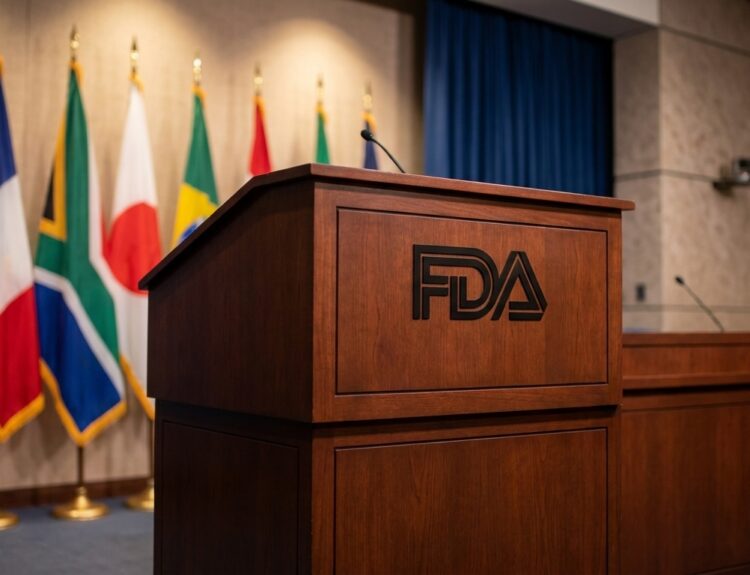
The July 2026 guidance is nonbinding on paper. In practice, it hands every psilocybin, LSD, and MDMA developer the syllabus the field wishes it had two years ago, and it makes clear that the science, not the enthusiasm, has to carry the application.
In August 2024, the FDA sent Lykos Therapeutics a complete response letter for its MDMA-assisted therapy for post-traumatic stress disorder and asked the company to run another Phase 3 trial. Within weeks, Lykos had cut roughly three-quarters of its staff. The most advanced psychedelic program in the country had just discovered, in public, that a decade of striking clinical results was not enough. The obvious question was what, exactly, would be. The FDA’s new guidance, Psychedelic Drugs: Considerations for Clinical Investigations, published this July by the agency’s Division of Psychiatry, is the closest thing to an answer we have.
It is worth being precise about what the document is and is not. Every page carries the line “Contains Nonbinding Recommendations,” and the guidance states plainly that psychedelic programs face “the same regulations and same evidentiary standards for approval as other drug development programs.” There is no special lane here, no lowered bar for a hot category. What the FDA offers instead is a set of foundational constructs, discipline by discipline, for a field it openly concedes it has limited experience regulating. For sponsors, that framing is the whole story. The agency is not skeptical of psychedelics. It is skeptical of soft evidence, and it has now written down exactly where the soft spots are.
The problem the whole field is built on
Start with the one that matters most. Psychedelics produce effects patients cannot miss and observers cannot ignore, which means the blind in a blinded trial tends not to hold. The guidance names this directly as “functional unblinding,” and walks through the cascade: patients who feel the drug expect to benefit, patients who get an inert placebo and feel nothing expect that they will not, and raters who can guess the arm score accordingly. This is not a footnote. It is the reason the FDA says a traditional placebo “can be problematic for assessing efficacy,” and it is, in plain terms, the fault line the Lykos advisory committee kept returning to.
The guidance does more than diagnose. It floats a menu of countermeasures that read like design requirements: central raters blinded to both treatment allocation and visit number, blinding questionnaires that ask subjects and staff to guess the arm on a Likert scale, and expectancy questionnaires given before randomization and again at the end of treatment. Most striking is a structural suggestion, that sponsors run complementary trials across Phases 2 and 3, pairing a placebo-controlled study with a dose-response study that uses low, middle, and high doses and no placebo at all. The logic is clean. The no-placebo arm characterizes dose-response with less unblinding, while the placebo arm anchors the safety read. And the bar is set in the open. Results, the FDA writes, must be “strongly persuasive and robust across study endpoints to overcome biases that may be introduced by functional unblinding.” Any sponsor reading that sentence should hear it in the voice of the panel that voted against Lykos.
The therapy question nobody wants to answer
The second landmine is the psychotherapy component, and here the guidance is unusually candid. As of publication, it says, “the contribution of the psychotherapy component to any efficacy observed with psychedelic drug treatment has not been characterized.” That is a remarkable admission to build a regulatory expectation on, and the FDA’s proposed fix is just as pointed: a factorial design that separates the contribution of the drug from the contribution of the talk. There is an operational tell buried in the same section. The in-session monitor, the guidance advises, should not be the person who delivers the later psychotherapy, because a therapist who watched the dosing session can usually deduce the arm and bias everything that follows. For companies whose entire thesis is drug plus therapy sold as a single product, this is a strategic gut check. The agency is signaling that it may ask you to prove the molecule works without the therapist, and it is warning that the therapy itself could end up written into your label as a condition of use.
The cost of doing it right
Then there is the part chief financial officers will notice. The guidance expects each dosing session to be observed by two monitors for its full duration, which for a psilocybin or LSD session can mean the better part of a day. The lead monitor must be a licensed, independently practicing clinician with graduate-level training and experience in psychotherapy. The assistant needs a nursing or bachelor’s degree and at least a year in a licensed mental health setting. If the lead is not a physician, a licensed physician has to be reachable on site within fifteen minutes. On top of the staffing, the FDA wants the expected psychedelic effects themselves, the euphoria, the hallucinations, the altered cognition, recorded as adverse events even when the patient experiences them as pleasant or therapeutic. Compass Pathways, which is running the largest psilocybin program in the clinic for treatment-resistant depression, has already built much of its trial machinery around intensive session monitoring. For a smaller sponsor modeling a Phase 3 budget, this section quietly reframes the economics of the whole category. The therapeutic session, not the chemistry, is the cost center.
Schedule I, and a little relief
The abuse-potential and scheduling burden is real, and the guidance does not soften it. Most of these drugs are Schedule I, so investigational programs must satisfy DEA handling, storage, and manufacturing rules, and an eventual approval triggers a formal rescheduling action. Expected effects tied to abuse have to be captured as adverse events of special interest. But there is genuine relief in the text too. The FDA says a dedicated human abuse potential study “may not be scientifically necessary” when a drug’s subjective effects are already well characterized from extensive clinical use and strong epidemiological data exist. For LSD and psilocybin, decades of human exposure may let sponsors lean on the published record rather than run fresh abuse studies, a meaningful shortcut. MindMed, which is developing a form of LSD for generalized anxiety disorder and holds a breakthrough therapy designation, is exactly the kind of program that stands to benefit. The nonclinical section carries its own specific warning: any compound with activity at the 5-HT2B receptor needs a hard look at heart-valve safety, with echocardiograms and exclusion of patients who already have valvulopathy, and the guidance flags that combining MDMA with a monoamine oxidase inhibitor can produce a life-threatening hypertensive crisis.
What it signals
Read as a whole, the guidance is not the door slamming that some feared after Lykos. It is closer to the opposite. The FDA has taken a field it clearly believes holds promise and written down, in nonbinding but unmistakable detail, the standard of proof it intends to hold. The message to sponsors and their investors is that the enthusiasm phase is over and the engineering phase has begun. The programs that clear this bar will be the ones that designed for functional unblinding from the first protocol, that were honest early about what the therapy contributes, and that treated the monitoring burden as the cost of a real indication rather than a line to trim. The rest will keep running beautiful early-phase studies, and keep discovering, the way Lykos did, that beautiful is not the same thing as persuasive.

Moe Alsumidaie, MBA, MSF, is founder and Chief Editor of Vanguard Publications, which publishes Clinical Trial Vanguard, Pharma Vanguard and BullScope, and Head of Research at CliniBiz. He has two decades in clinical trial operations and data science, with earlier roles at Genentech, Abbott Vascular and Stanford University Medical Center, and is a guest lecturer in clinical trial sciences at Rutgers University.