
The sponsor-side CTM who opened her inbox on September 2 and saw Fortrea’s announcement had one immediate operational question, and it had nothing to do with deal strategy. It was: which of my active Phase I studies sits inside Worldwide’s early-phase network right now, and what happens to my contract on Monday? That is the right question, and most teams were not ready to answer it quickly.
Fortrea has agreed to acquire the Early Phase Services division of Worldwide Clinical Trials for $45 million in an all-cash transaction, picking up Worldwide’s Clinical Pharmacology Unit (CPU) and bioanalytical capabilities in the process. The deal closes subject to regulatory and licensing approvals, which means there is a window, likely weeks to a few months, during which sponsors have active Worldwide contracts, Worldwide SOPs, and Worldwide site staff managing their Phase I participants while the entity they are actually contracting with is in legal transition. That window is where operational risk concentrates, and it is almost always underestimated.
What Actually Transfers in a CRO Division Sale
A division acquisition does not automatically novate your master service agreement. Sponsors with active Phase I work inside Worldwide’s CPU network need to pull their contracts now and identify three things: which entity is the named contracting party, whether there is a change-of-control clause that triggers notification or renegotiation rights, and whether the statement of work references Worldwide-specific SOPs, personnel, or facilities by name. Any of those conditions creates an operational action item before the deal closes, not after.
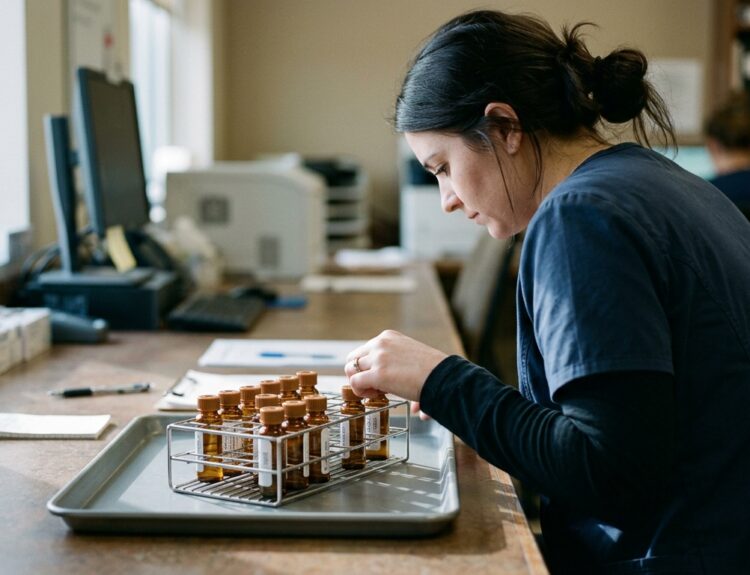
The operational continuity risk that sponsors underweight here is personnel. A CPU or clinical pharmacology unit runs on a small number of highly trained staff: Phase I-experienced nurses, clinical pharmacologists, pharmacokineticists, and the coordinators who run the participant flow inside what are often inpatient or close-monitoring environments. These are not general-site CRCs who can be replaced from a local hiring pool in three weeks. When a division changes hands, retention of that staff through the transition period depends entirely on decisions Fortrea and Worldwide are making right now, in conversations sponsors are not part of. Sites I work with across early-phase networks have seen coordinator turnover spike during CRO acquisitions, not because conditions deteriorate, but because uncertainty drives departures before anyone has made a single bad decision.
There is also the SOP gap to manage. Worldwide’s Phase I division operates under its own quality management system. Fortrea, which reported $2,696.4 million in total revenue for full-year 2024,, has its own QMS. During the transition period, the question of which SOP governs an SAE report, a protocol deviation write-up, or a sample handling procedure is not academic. ICH E6(R3) makes clear that the sponsor retains ultimate responsibility for trial oversight regardless of what a CRO is contracted to perform. That accountability does not pause because your CRO is mid-acquisition.
The Phase I Capacity Math Sponsors Should Be Running
Step back from the contract mechanics and the consolidation logic becomes visible. Phase I capacity in purpose-built CPUs has not expanded proportionally with the volume of first-in-human and clinical pharmacology studies that early-development pipelines are generating. When a CRO the size of Fortrea pays $45 million for a division rather than building equivalent capability organically, it is signaling that qualified Phase I capacity is constrained enough that acquisition is cheaper than construction. Sponsors who depend on a broad vendor panel for Phase I work should register that signal directly: the pool of independent Phase I CRO options is narrowing.
Charles River Laboratories’ acquisition of Explora Biolabs in April 2022 for just under $300 million moved in the same direction. The pattern across CRO consolidation has been consistent: early-phase and specialized capability consolidates faster than late-phase general CRO capacity, because the infrastructure cost (inpatient units, bioanalytical labs, pharmacokinetic expertise) is high enough to make greenfield competition unattractive. For sponsors managing IND timelines, this matters at the site selection stage. Fewer independent early-phase networks means fewer competitive bids, which affects both price and timeline leverage.
Site activation inside a Phase I unit carries real cost. Tufts CSDD data puts site activation at approximately $20,000 per site, with ongoing administrative costs running roughly $1,500 per site per month through startup. In a CPU environment, those figures can run higher because of the specialized equipment qualification, pharmacy accountability requirements, and inpatient staffing overhead involved. Sponsors who built their Phase I vendor relationships assuming stable competitive alternatives now face a market where two of the largest players have absorbed capacity that was previously independent.
What Sponsor Clinops Teams Should Do Before Close
The operational response here has a short timeline. Before the Fortrea-Worldwide transaction closes, sponsor clinical operations leads with active Phase I work at Worldwide’s CPU sites should confirm the contracting entity named in their MSA, issue written notice to Worldwide requesting confirmation of operational continuity, and ask specifically whether any named Worldwide personnel on their SOW have signed retention agreements through the transition period. That last request will be uncomfortable to make, and it is exactly the one worth making.
Across the network of early-phase studies we support at CliniBiz, the acquisitions that create the least disruption share one characteristic: the sponsor treated the announcement date as a readiness trigger, not the close date. The teams who waited for the deal to close before reviewing their contracts found themselves renegotiating terms under time pressure, with less leverage, after key personnel had already made decisions about where they were going next.
For sponsors who are not yet mid-study but are planning Phase I work and were considering Worldwide’s CPU as a vendor option: the competitive dynamic has shifted. You are now evaluating Fortrea’s early-phase capability and Fortrea’s pricing, with Fortrea’s contract terms. Whether that is better or worse for your program depends on your relationship with Fortrea and your protocol requirements, but it is a materially different conversation than the one you would have had on September 1. Request updated capability profiles, ask for transition SOPs if they exist, and get clarity on which QMS will govern your study from initiation through the first interim data package.
The first sponsor to lock a clean Phase I contract under the new Fortrea structure, with retention commitments on key personnel and QMS transition language in the SOW, will be operating from a position of certainty while competitors are still reading the press release.
References
- FierceBiotech, “Fortrea boosts early-phase CRO platform with $45M acquisition of Worldwide division”
- Applied Clinical Trials Online, “Fortrea to Acquire Worldwide Clinical Trials’ Early Phase Services Division for $45 Million”
- Fortrea Investor Relations, “Fortrea Reports Fourth Quarter and Full Year 2023 Results” (total revenue $3,109.0M for 2023; $2,696.4M for full-year 2024)
- Intuition Labs, “Clinical Trial Start-Up Costs” (site activation cost ~$20,000 per site; ~$1,500 per site per month)
- WithPower, “Top CROs 2024” (Charles River Laboratories acquisition of Explora Biolabs, April 2022, ~$300 million)