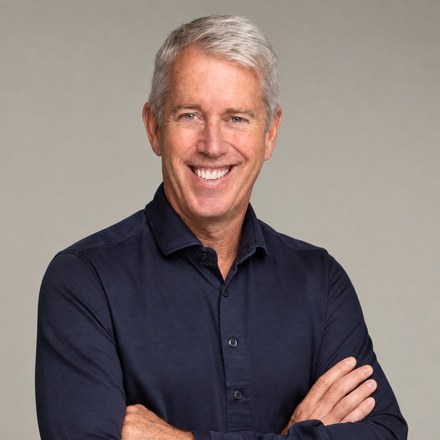
Chief Product Officer, Image Analysis Group (IAG)
When a Phase 3 trial changes vendors mid-study, the problems sponsors discover are rarely the ones they anticipated. Jon Himoff, Chief Product Officer at Image Analysis Group (IAG), has sat across the table from enough distressed sponsors to know that the real friction points are not scanner protocols or endpoint disputes. They are disengaged outgoing vendors dragging their feet on data transfers, sites juggling incompatible systems, and readers burning time on data entry that a well-designed platform would have prevented. IAG’s answer is DYNAMIKA™, a proprietary imaging platform the company designed, built, and operates entirely in-house on Google Cloud infrastructure. In this conversation, Himoff explains what purpose-built actually means in practice, why the distinction between a platform and a configured add-on shows up exactly when a study goes off-script, and what sponsors consistently underestimate when they commit to a late-phase global imaging program.
Moe: Why do sponsors underestimate the logistics problems in a Phase 3 trial that's already underway?
Jon Himoff: The first thing we have to understand is what went wrong with the previous vendor. Is there a known problem, and is everyone clear on what that problem is? Or are we just going to inherit a problem we're also going to get mired in? Because the problems aren't just with the sites or the imaging CRO. Sometimes they're also within the sponsor and the study itself.
So you have to be practical and ask: do we actually have a chance? Once you get into a midstream study, there are a lot of challenges. Getting the sites up to speed is one, but the good news from our side is that sites only need a browser to access our system immediately. We also give them online training. It’s very low friction, which is really critical. We can get sites transitioned over smoothly, get them running quickly, and pick up the day-to-day activity without a lot of stress on them.
The same goes for the readers. We can bring them over, give them convenient forms, and in some cases reduce the amount of keystrokes they have to make. We can consolidate data so they can focus on the images rather than spending time navigating forms and making data entry mistakes. Our system has some built-in boundaries so readers cannot easily make those keystrokes errors.
The other back-end challenge is getting the data over from the previous vendor. That is not really a technical challenge. If we have the data, we can map it and bring it over fairly easily. The more typical problem is that the previous vendor is no longer incentivized to work quickly. They can drag their feet, they can be slow to respond, and that can be a real drag on transitioning a study. All in all, it is totally possible, and we have done it with many clients. But it is a big hurdle, and everyone needs to be paying attention and collaborating effectively. A big Phase 3 study can become a big mess if you are not careful.

Moe: How does running multiple trials on a single platform change what a sponsor carries forward from one study to the next?
Jon Himoff:
DYNAMIKA™ is a system we designed, built, and run ourselves. That is already very different from how most of the industry works. A large part of the industry uses third-party software. Because we built ours, we understand every line of code. We can make changes and be very responsive. We do not have to submit a request to a third party where it ends up in someone else’s queue and has its own set of delays.
The system runs on Google Cloud, which gives it the ability to scale. It can handle small studies, but it can also handle really large Phase 3 programs. From a sponsor perspective, as they do more work with us, they become familiar with how the system is laid out and how to access what they need. Every study has a dashboard where they can see upload volumes, reader performance, query status, and overall cycle time. If they are managing multiple studies, they can see the lifecycle of all of them through one dashboard.
On the design side, our challenge was to be both flexible and scalable. We addressed scalability through Google Cloud, which has strong resources for managing DICOM files and conversions. For flexibility, we made the system as configurable as possible. The configurations themselves are not technical. They are workflow-oriented. We designed our own task manager that creates the individual pieces of a workflow, and that can be set up specifically for any kind of study. If a sponsor wants a complex adjudication with a complex reader assignment, all of that can be configured. There is no development work associated with it. It is really just configuration in the system.
On the back end, we use a format called JSON. The JSON files allow us to hold the specific nature of each study as a data object and then manage that through to data transfers, so sponsors can receive data in exactly the format they want. You get the benefits of a multi-tenant, multi-study platform while still being able to make it very specific to each study.
When you deal with us, you're dealing with technology people and not just people who are running a system that maybe lives on some virtual machine someplace.
Moe: How does that configurability help IAG become a preferred vendor at large pharma companies?
Jon Himoff: From the sponsor side, they kind of do not care how you do it. They just want results. But where it manifests itself is that we are fully compliant under GxP, under 21 CFR Part 11, and we have SOC 2. So we can stand up to our claims.
Some people might say outrageous things, and the sponsor thinks, "I really do not think that is going to happen." But when you talk to us, we are very direct and very open, because we built the entire system. We know what is there and what is not there. When you deal with us, you are dealing with technology people, not people who are running a system that lives on some virtual machine somewhere, where two different processes require switching data between them and there are all these activities around closing out databases and managing applications. We do not do any of that. That is an old-school way of doing things. In a cloud-based multi-tenant environment, you would never do that.
It creates a sense of speed and detail that I think is very valuable for supporting the success of their studies.
Moe: Why does it matter that DYNAMIKA™ was built specifically for imaging CRO workflows rather than assembled from general-purpose tools?
Jon Himoff: Tools like PACS, and even some of the clinical tools people use in studies, exist in research because people do not have anything better. They are trying to repurpose tools that have a clinical lifecycle. When we look at clinical research studies from a design perspective, we are not thinking of them as something that sits within the hospital. It is not a hospital-based activity. The data comes out of the hospital in the easiest way possible, because imaging centers are very busy and very expensive resources. We want to make it easy for them to give us the data.
Some of our competitors have two completely different systems: one for collecting, QC-ing, and holding data, and another for reading, reporting, and sharing data out, with an activity to move data between them. And in some cases, different treatment areas within the same portfolio use different systems. From the site and reader perspective, that can be baffling. From our side, it is one browser. You log in. We maintain all the changes. We try to make it easy, and we try to give users enough guidance that the system helps them complete their jobs.
Moe: How does a purpose-built platform respond when a study needs something non-standard that nobody planned for?
Jon Himoff: Things definitely change. It is a real-world environment and some of these studies run for multiple years. There are amendments. Sometimes patients move between cohorts. All of that is configurable in our system, and it is a fairly straightforward activity.
We also have significant documentation requirements to validate data, and that has to be managed, synchronized, and organized. This is a big area now for AI workflows. We can use AI-driven workflows to create updated documentation and to take insights from reports and use that to guide studies. I would say we are not looking to bring AI into the system directly, because we are concerned about the compliance issues around that. But using AI to drive documentation and surface insights is something we are actively working on now.
Where sponsors get concerned over time is keeping readers aligned and understanding whether the sites are consistently providing the right data, whether the data needs to be checked, and how accurate it is coming in. That has a real-world nature to it that, over one, two, or three years, genuinely needs to be monitored and carefully checked. That is for sure a big area for AI as a participant in the study, monitoring the quality of the data coming through, though not within the system itself.
Moe: How does a sponsor actually notice they are working with infrastructure that was designed for this, rather than adapted to it?
Jon Himoff: Building software is in the DNA of this company. This is how we look at the world. We did not build a system because we were bored. We genuinely felt that the clinical research market is underserved in terms of having dedicated software that delivers what sponsors actually need.
When we encounter interesting challenges, we solve them ourselves. We are working now in China, and our team worked through the obstacles around how Chinese data has to be handled. We built that software ourselves. It runs in China on Alibaba Cloud, with a secure, compliant communication back to our cluster here, and we did that fairly quickly because it is our team and we know how to do it.
We are also working now with a cardiac group and integrating their data, creating new cardiac monitoring MRI read forms. We do that quickly and carefully because it is us. If you had to push that to a third party, you would wait in line and possibly pay significant fees. Because our team is knowledgeable, we can move quickly and deliver something that is very specific to that type of integration.
That is where sponsors see it. We can get into the details with them, probe the requirements, work with their technical teams, understand the data output that needs to come through, go build it, QA it, test it, and bring it through our whole development cycle. Sponsors can see that result quickly and have confidence it is done properly.
We really felt that the clinical research market is underserved in terms of actually having dedicated software to provide the solutions that the sponsors want.
Moe: Why is the infrastructure decision the most important one to get right before the first patient is enrolled?
Jon Himoff: We make all of those decisions, so sponsors do not really have to worry about most of it. Because we are backed by Google Cloud, we have immediate failovers built in, so the system is effectively always available. Google has sophisticated tools for backup and recovery, and the data sits across multiple data centers. If a sponsor wants the data kept only in Europe or only in the US, we can do that.
The resources we have through Google are really substantial. Sponsors can focus on working with their data and proving that their drugs perform the way they expect, rather than worrying about infrastructure, compliance, and security.
On the activity side, the immediate demand we are seeing is for faster data sharing. With the interest now in real-time clinical trials in the US, we can support that immediately. We can stream data. We can send it every hour if needed. There is no new technology required from our side. That is how the system was designed. We have had discussions with the large CROs and they have raised a lot of challenges around exchanging data, checking compliance, and all of that. We meet all of those requirements. That is a combination of us being technology people and having Google Cloud behind us. When you put those two things together, it is a powerful combination.
Jon Himoff is Chief Product Officer at Image Analysis Group (IAG), where he leads the development and strategy of DYNAMIKA™, the company's proprietary clinical trial imaging platform.

Moe Alsumidaie, MBA, MSF, is founder and Chief Editor of Vanguard Publications, which publishes Clinical Trial Vanguard, Pharma Vanguard and BullScope, and Head of Research at CliniBiz. He has two decades in clinical trial operations and data science, with earlier roles at Genentech, Abbott Vascular and Stanford University Medical Center, and is a guest lecturer in clinical trial sciences at Rutgers University.