
The Phase 3 data for denecimig was, by any measure, compelling. Novo Nordisk’s bispecific antibody FVIIIa mimetic, developed under the program name Mim8, significantly reduced annualized bleeding rates in hemophilia A patients with and without Factor VIII inhibitors. The company filed its Biologics License Application in September 2025. An FDA decision was expected in the third quarter of 2026. Then a pre-license inspector walked into a manufacturing facility and wrote down what they saw.
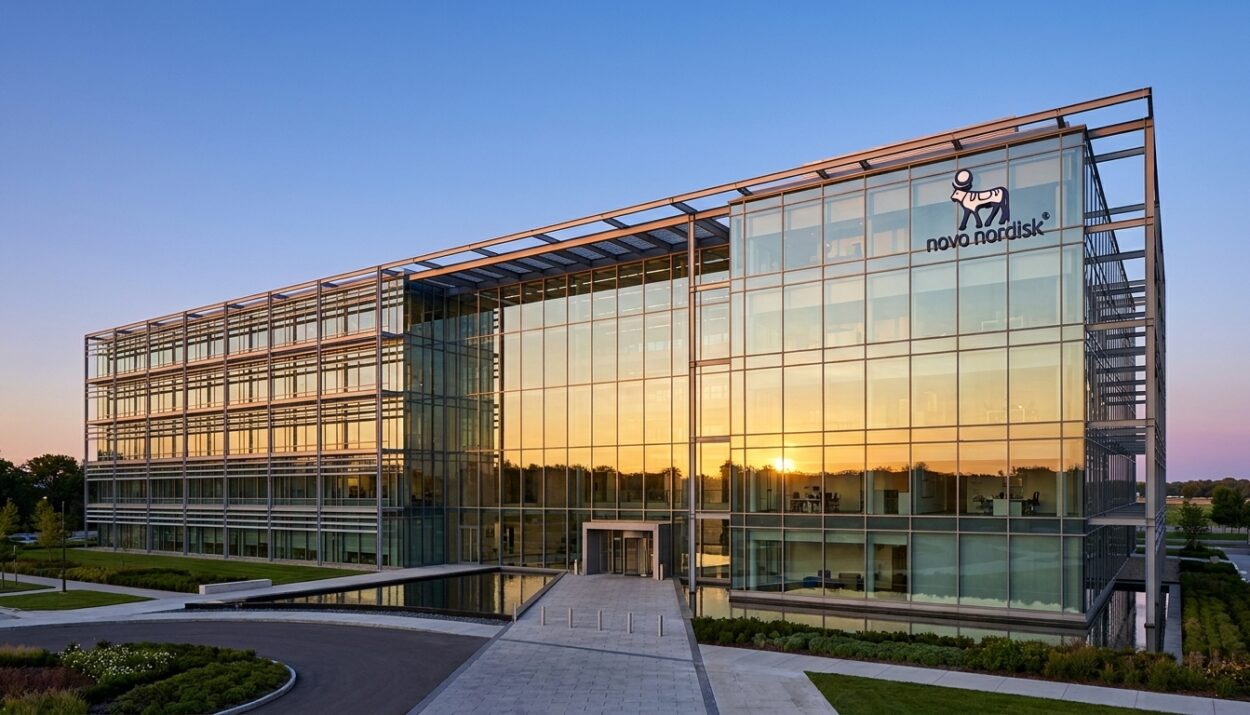
The FDA’s extended review, confirmed as of this week, cites “ongoing facility remediation activities” at an unnamed manufacturing site. No 483 observation numbers have been published. No warning letter has issued. The facility itself remains unidentified in public disclosures. What we know is precisely what Novo disclosed and nothing more: the factory needs fixing, the clock has reset, and patients who were months away from a subcutaneous prophylaxis option that requires no Factor VIII replacement are now waiting on a remediation timeline no one will specify.
That opacity is the first problem. The second is that it was entirely preventable.
A Timeline That Should Have Caught This Sooner
Denecimig’s clinical program, the Phase 3 FRONTIER series, generated data robust enough to support a BLA submission. The mechanism is sophisticated: the drug mimics Factor VIIIa by bridging Factor IXa and Factor X, restoring thrombin generation without needing Factor VIII itself. Novo submitted the BLA in September 2025. The FDA’s standard review clock for a Priority Review runs twelve months, which placed the target action date squarely in Q3 2026.
Pre-license inspections under 21 CFR Part 600 are not optional, they are not a surprise, and they are not new. The FDA schedules them as part of the BLA review cycle. Novo’s manufacturing team knew this inspection was coming. The inspection happened. The inspectors found remediation work in progress at the facility. The FDA then extended the review period, citing exactly that in-progress remediation. Which means Novo submitted a BLA while knowing a facility was under active corrective action, or failed to know because their quality oversight didn’t surface it. Either answer is a serious problem.
The FDA’s own GDUFA framework, while specific to ANDAs, assigns a 15-month review timeline for original applications where a manufacturing or testing facility is certified as ‘not ready for inspection’ on Form FDA 356h at submission. Biologics applications operate under different statutory timelines, but the operational logic is identical: a facility that cannot pass inspection on the first attempt resets the clock, and every day of remediation is a day added to the approval timeline. Novo’s team had to know this. The question the public record cannot currently answer is when they knew the facility had issues and what they did about it.
The Remediation Black Box
Here is what makes this enforcement moment structurally corrosive rather than merely inconvenient. The FDA has not identified the facility. Novo has not identified the facility. The inspection observations, whatever was written on those FDA-483 forms, have not been made public. The public record contains a causal phrase, “ongoing facility remediation activities,” and nothing else. For the hemophilia A community, this is not a transparency problem in the abstract. The competitive landscape for this indication is genuinely constrained: BioMarin’s gene therapy Roctavian received FDA approval in June 2023, but only for adults with severe hemophilia A without pre-existing antibodies to its AAV5 vector, a meaningful eligibility restriction. Denecimig, by contrast, was designed to work regardless of inhibitor status. The patients waiting for it are not interchangeable with Roctavian’s eligible population.
Now consider the sponsor’s disclosure obligation. Novo’s BLA was built on clinical data from the FRONTIER program, which demonstrated significant reductions in annualized bleeding rates across hemophilia A patients regardless of inhibitor status. The clinical case for approval is apparently intact. The FDA’s extended review is not a clinical hold. But the practical consequence for patients is functionally identical to one: the drug does not get approved until the factory problem is fixed, and the factory problem is being fixed on a schedule the public cannot see.
Sponsors routinely argue that facility identity must remain confidential during active remediation to protect proprietary manufacturing processes. That argument has some validity. It has no validity as a shield against accountability for the quality systems that allowed an inspection-failing facility to anchor a Q3 2026 BLA action date in the first place.
Novo’s own disclosures about the denecimig BLA review extension do not specify when internal quality teams identified the facility’s condition, what CAPA activities were initiated and when, or whether the pre-license inspection findings were anticipated. Those omissions are notable. A sponsor that had fully disclosed the situation would have published a remediation timeline alongside the delay announcement. The absence of that timeline suggests one of two things: the remediation scope is still being defined, or the scope is defined and the timeline is not favorable enough to share.
What This Pattern Costs, and Who Owns It
The Novo denecimig delay is not an isolated event. It sits inside a well-documented pattern of late-stage manufacturing failures that sponsors consistently fail to anticipate, despite having years of development time to identify and correct them. The FDA’s pre-license inspection is the last checkpoint before approval, not the first manufacturing quality review. When a facility fails that checkpoint, it means every earlier internal audit, every CMO qualification review, every annual product review, every change control process either missed the problem or surfaced it without generating adequate corrective action. That is a quality system failure across multiple functions and, likely, multiple years.
For sponsors running Phase 3 programs with biological products, the operational directive is not complicated. Build a mock pre-license inspection into your BLA submission timeline, no later than six months before the planned filing date. Staff it with external GMP consultants who have no incentive to validate the status quo. Scope it explicitly against the FDA’s pre-license inspection requirements under 21 CFR Part 211 and Part 600. If the mock inspection finds remediation work in progress, you have a binary choice: delay the BLA or fix the facility before filing. What you do not do is file the BLA and hope the inspector sees something different than your auditors did.
For site directors and clinical operations leads, the lesson reads differently. When the sponsor’s BLA gets a manufacturing-driven review extension, clinical trial sites bear a secondary cost that rarely appears in the press release. Patient retention protocols designed around a Q3 2026 approval, expanded access programs, compassionate use applications, and follow-up visit schedules all require revision. The operations burden of a manufacturing delay falls on the people running the trial, not on the quality systems team that failed to catch the facility problem.
FDA-watchers should be pressing for one specific piece of transparency: the agency should publish, as a matter of course, the nature of facility deficiencies that trigger BLA review extensions, even if the facility name remains confidential. The current practice of citing “ongoing remediation activities” without any qualitative description of what is being remediated makes it impossible for the clinical development community to learn from enforcement patterns. An aggregate annual report on pre-license inspection deficiency categories, mapped to BLA review extensions, would give sponsors the intelligence they need to build better pre-submission inspection programs. The FDA’s GDUFA framework documentation already contemplates facility readiness as a structured review criterion. Biologics deserve the same level of published operational transparency.
The next signal to watch is the remediation timeline Novo may disclose in its Q3 2026 earnings reporting. If the company cannot commit to a specific facility clearance date, the approval window slips into 2027, and the competitive gap in inhibitor-patient coverage widens further.
References
- Endpoints News, “FDA delays Novo’s hemophilia A drug review over factory issues”
- Bleeding.org, “Novo Submits New Application for Its Investigational SubQ Hemophilia Therapy”
- Drugs.com, “Denecimig (Mim8) Significantly Reduced Annualised Bleeding Rate in Hemophilia Regardless of Inhibitor Status”
- Bleeding.org, “Hemophilia A Gene Therapy Product Receives US FDA Approval” (Roctavian, June 2023)
- Economic Times Pharma, “US FDA extends review of Novo Nordisk’s hemophilia drug over facility issues”
- FDA, GDUFA Framework: Facility Readiness and Inspection Timelines (FY 2023–2027)

Moe Alsumidaie, MBA, MSF, is founder and Chief Editor of Vanguard Publications, which publishes Clinical Trial Vanguard, Pharma Vanguard and BullScope, and Head of Research at CliniBiz. He has two decades in clinical trial operations and data science, with earlier roles at Genentech, Abbott Vascular and Stanford University Medical Center, and is a guest lecturer in clinical trial sciences at Rutgers University.