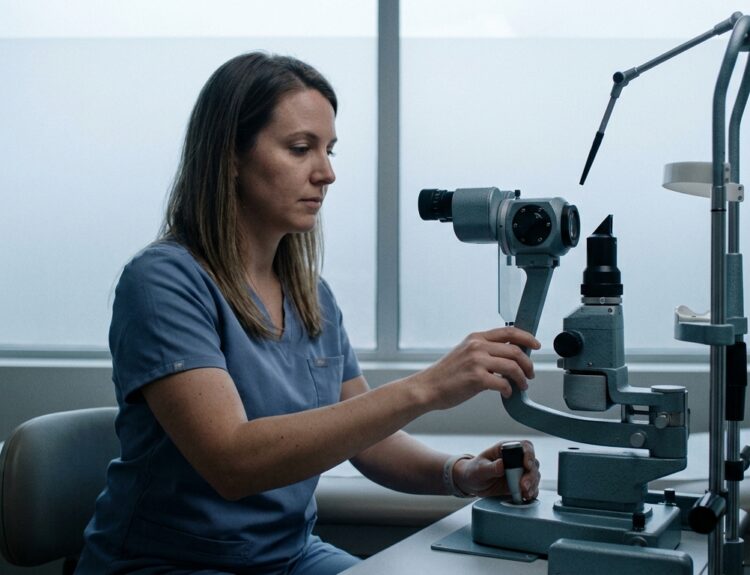

Picture a site coordinator at a mid-sized NHS Trust in 2026, working through a protocol binder for a psilocybin-assisted therapy trial. The binder is thick. It specifies the drug, the dose, and the timepoints. What it cannot specify, with anything approaching precision, is the room. The lighting. The music. The exact words a therapist should use when a patient’s acute psychedelic experience turns frightening at hour two of a six-hour session. These variables are not minor operational details. In a therapy where the psychological context of the experience is considered inseparable from the therapeutic outcome, they are the intervention. And right now, no regulatory framework in the world requires sponsors to define them with the same rigor demanded of a small-molecule tablet.
That is the quiet crisis underneath the optimistic headlines. The Nature Medicine analysis on translating psilocybin treatment from research to practice makes the stakes concrete: the gap between a controlled academic trial and repeatable, scalable clinical delivery of psilocybin-assisted therapy may be wider than the field has publicly acknowledged. And the clock is running. COMPASS Pathways received FDA Breakthrough Therapy designation for its COMP360 psilocybin candidate for treatment-resistant depression back in 2018. The field has had eight years to build the infrastructure for real-world delivery. It has not yet done so.
The Protocol Has No Box for the Playlist
The regulatory architecture for psychedelic drug development is, on paper, advancing. The FDA finalized its guidance, “Psychedelic Drugs: Considerations for Clinical Investigations,” on July 13, 2026, replacing a draft issued on June 26, 2023. That document addresses eligibility criteria, risk mitigation, and the design of the psychological support component that must accompany the pharmacological intervention. It is a meaningful step. But read it carefully and you will find the same gap the site coordinator faces: the guidance acknowledges that setting, therapist training, and session support matter, without establishing minimum specifications for any of them.
This creates a structural problem for sponsors designing Phase 2 and Phase 3 trials. When the therapeutic context is itself a treatment variable, inconsistency in that context produces noise that looks like signal variance. A patient who receives psilocybin in a calm, aesthetically designed room with two well-trained therapists playing a curated music score is receiving a meaningfully different intervention than a patient in a standard clinical room with overhead fluorescents and a single coordinator present. Both experiences generate efficacy data that gets pooled into the same analysis.
The field has recognized this. Researchers from the University of Exeter, McGill University, and Imperial College London developed the Reporting of Setting in Psychedelic Clinical Trials (ReSPCT) Guidelines, explicitly designed to establish a global standard for how trials report context, including music, lighting, and cultural safety considerations. The guidelines exist. Their adoption is voluntary. The FDA’s July 2026 guidance does not mandate their use.
Which means sponsors are currently building Phase 3 programs on top of Phase 2 data that was generated under conditions no one has formally standardized.
When the NHS Becomes the Testing Ground
The King’s College London publicly-funded randomised controlled trial brought psilocybin into an actual NHS setting, and its results were striking: 43 percent of the psilocybin group met the threshold for treatment response, with significantly greater reductions in depression scores at three weeks compared to placebo. That is not a boutique academic finding. That is a signal generated inside a real health system, with all the resource constraints, scheduling pressures, and workforce variability that entails.
But the KCL trial also revealed how much the NHS delivery model strains under the specific demands of psychedelic-assisted therapy. A standard pharmacological trial at an NHS site requires a prescriber, a dispensing pharmacist, and a monitoring nurse. A psilocybin trial requires all of that plus two trained therapists available for a six-to-eight hour session window, a dedicated preparation session before dosing, and multiple integration sessions afterward. The session-to-therapist ratio alone restructures an entire site’s staffing model. That is before addressing the question of who qualifies as a “trained therapist” for this indication.
Oregon built its own answer to that question through Measure 109, creating a state licensing framework for psilocybin facilitators with its own training curriculum. Colorado followed. The FDA has not yet told federal trial sponsors what training standard their psychological support staff must meet. The MHRA in the UK integrates psychedelic medicine trials into its existing Clinical Trial of an Investigational Medicinal Product framework without a separate psychedelic-specific pathway. Both regulators are working within frameworks designed for drugs that act for four hours, not experiences that unfold over six and require therapeutic processing for weeks afterward.
This is the counterintuitive reality the field keeps stepping around: the most replicable part of a psilocybin trial is the drug. The hardest part to replicate is the human infrastructure around it. Sponsors have spent years optimizing their pharmacokinetic models and dose-finding strategies. The therapist training pipeline, the site qualification criteria, and the session environment standards remain largely ad hoc. When a Phase 3 program spans 40 sites across five countries, “ad hoc” is a validity problem.
What Sponsors Must Lock Down Before Phase 3
The Usona Institute’s PSIL201 trial, a Phase 2 randomized double-blind placebo-controlled study published in JAMA, evaluated the magnitude, timing, and durability of antidepressant effects from a single psilocybin dose in patients with major depressive disorder. The trial generated important durability data. It also operated, like every psychedelic Phase 2 to date, under a site-specific psychological support model that will not automatically transfer to a multi-site Phase 3. What worked at PSIL201’s sites may or may not work at sites that were not part of that program’s culture and training.
Sponsors preparing Phase 3 INDs for psilocybin indications should treat the psychological support component as a co-primary specification document, not an appendix. Concretely, that means locking three things before the IND hits the FDA’s desk. First, a Psychological Support Manual with version control, a training competency assessment, and a site certification process that mirrors the rigor applied to investigational drug dispensing. Second, a Session Environment Specification that defines minimum and maximum acceptable conditions, giving the ReSPCT guidelines regulatory teeth by incorporating them by reference. Third, a pre-submission meeting request specifically asking the FDA to confirm whether the agency will treat variability in the support component as a protocol deviation, and if so, at what threshold.
That last point matters more than it appears. Under the FDA’s current GCP framework, a protocol deviation is defined against the protocol. If the protocol never specified that two therapists must be present throughout the acute session, then a site running with one therapist due to staffing constraints has not deviated from the protocol. It has simply delivered a different intervention. The sponsor will not know which sites did this unless their monitoring plan explicitly captures it. Most monitoring plans are not designed to capture it.
Add a pre-submission Type B meeting to your regulatory strategy specifically scoped to psychological support standardization. Get the FDA’s position in writing before you enroll subject one. COMP360’s Phase 2b program generated data across multiple sites with dose comparisons, and COMPASS Pathways is navigating toward Phase 3 with that evidence base. The sponsors who solve the standardization problem at the IND stage will not face it as an approvability question at the NDA stage. The sponsors who defer it will.
That site coordinator at the NHS Trust is still reading her protocol binder. She has found the pharmacokinetics section, the adverse event reporting procedures, and the stopping rules. She has not yet found a page that tells her what to do when her single trained therapist calls in sick on a dosing day. In a trial where the human element is the mechanism, that missing page is not an administrative gap. It is a scientific one — and the FDA’s July 2026 guidance, for all its progress, has not yet filled it.
References
- Nature Medicine — “The trials of translating psilocybin treatment from research to practice”
- Psychedelic Beacon — “COMPASS Pathways FDA Breakthrough Therapy Designation for COMP360, 2018”
- Imperial College London — “ReSPCT Guidelines: New gold standard for psychedelic clinical trial reporting”
- King’s College London — “Promising results from first publicly-funded UK randomised trial of psilocybin for depression”
- PubMed / JAMA — Usona Institute PSIL201 Phase 2 psilocybin trial in major depressive disorder

Moe Alsumidaie, MBA, MSF, is founder and Chief Editor of Vanguard Publications, which publishes Clinical Trial Vanguard, Pharma Vanguard and BullScope, and Head of Research at CliniBiz. He has two decades in clinical trial operations and data science, with earlier roles at Genentech, Abbott Vascular and Stanford University Medical Center, and is a guest lecturer in clinical trial sciences at Rutgers University.