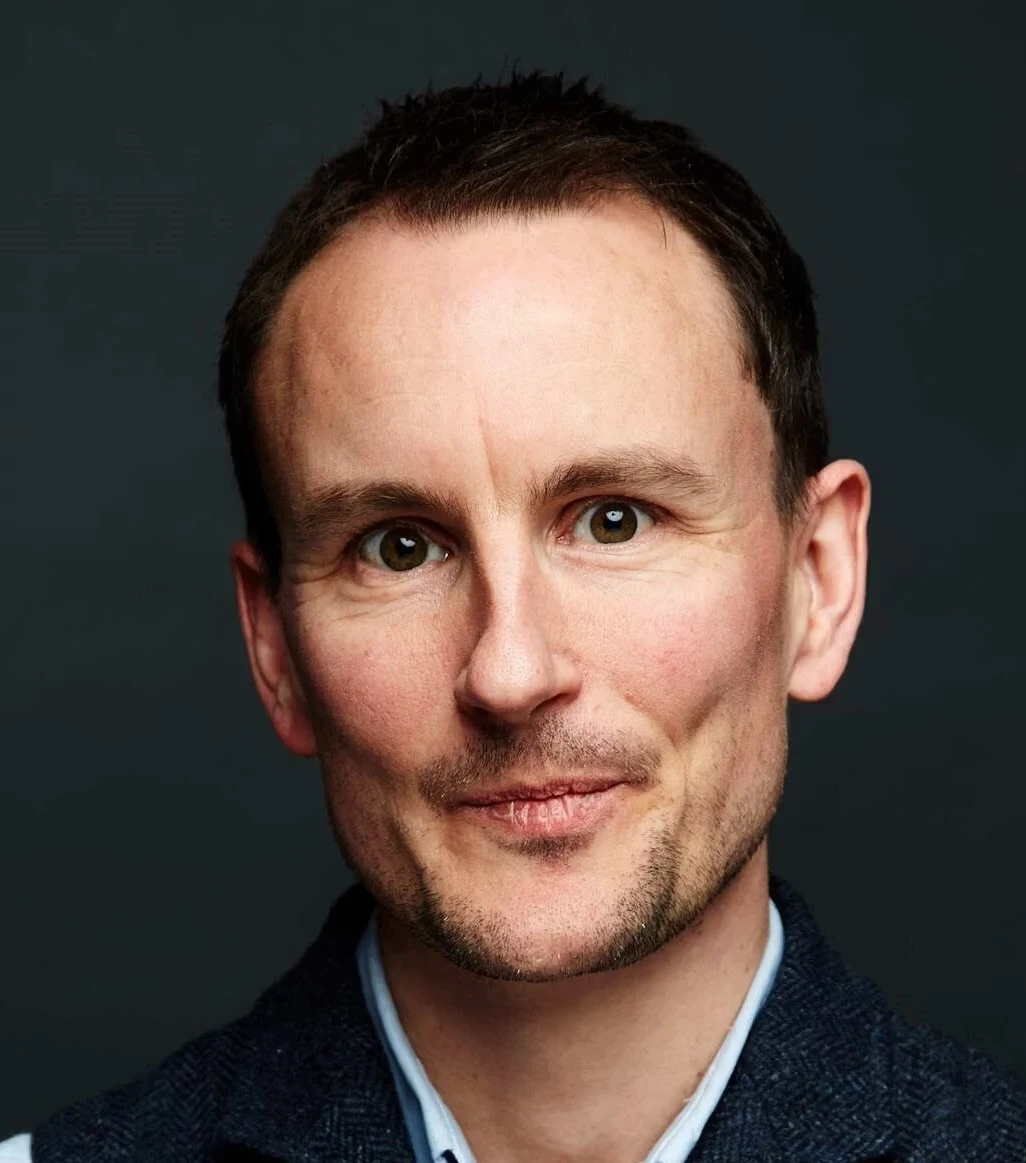
SVP & Executive General Manager, Medable
The clinical trial industry has spent years building impressive AI. The problem, according to Andrew Mackinnon, SVP and Executive General Manager at Medable, is that impressive is not the same as adopted. Drawing on an MIT study showing 95% of AI pilots fail to prove value, Mackinnon has watched the same failure repeat across sponsors and CROs: a talented team, a genuinely clever solution, and an organization that cannot absorb it. The technology worked. The rollout didn’t. Medable’s response is an agentic accelerator program built around forward-deployed engineers embedded directly with customers — a model that treats scaled adoption, not initial implementation, as the finish line. In an industry where fragmented data systems, immature governance, and accelerating regulatory change all converge on the same deployment moment, Mackinnon argues the question was never whether AI could do the job. It was always whether organizations could be structured to let it.
Moe: Why did you conclude that clinical AI’s core failure was an adoption problem rather than a technology problem?
Andrew Mackinnon: It wasn’t one specific trial or one specific failure — it was a very common conversation I had with countless customers. An innovation team, or a project team within a particular department, had built something very impressive using Claude, GPT, something of that nature. It did a very impressive thing, and it was impossible for them to scale it. Either they couldn’t get it signed off by QA, it wasn’t compliant with 21 CFR Part 11, it would struggle within a regulatory environment — or it purely couldn’t be scaled. They had it on a laptop and couldn’t find a way to get it onto everyone else’s laptop who needed to use it. That was something I heard across multiple customers, multiple scenarios, multiple functions, time and time again.
The technology did exactly what it was meant to do. It achieved an outcome. The team understood the problem and built something to fix it. They just couldn’t get it out into the wider organization. That is the perfect example of an adoption problem.
There was also an interesting paper from MIT — the one showing that 95% of AI pilots fail to prove any value at all. When you dig into it, there were two major failure points across just about every scenario: either they didn’t have the right problem to solve, or something solved a problem but couldn’t be scaled. Neither of those is a technology problem. They’re both adoption issues. So that’s where we started focusing — on having a program that takes you from problem to solution to scaled results. It isn’t successful until it’s delivering value at scale. It’s not enough to just build a clever thing for one person.
“The technology did exactly what it was meant to do. It achieved an outcome. The team understood the problem and built something to fix it. They just couldn’t get it out into the wider organization. That is the perfect example of an adoption problem.”
Moe: Why structure the program around forward-deployed engineers rather than a traditional implementation model?
Andrew Mackinnon: Very simply, deploying agentic AI is not a standard software implementation exercise — it goes far wider than what we would typically see. A lot of what we see with agentic and AI approaches has turned a lot of models on their heads, and that’s fundamentally why we don’t approach it with standard implementation processes.
Particularly once you get into clinical development, it’s an incredibly specialized field that requires a huge amount of vertical knowledge. When you’re working on agentic approaches and trying to change how processes work, how roles function, what a role actually does — to change all of those things, you need to understand the workflows, the challenges, the people, the problems, the processes intimately. You don’t get that from a requirements document. You have to have teams embedded collaboratively with the customer in the field, sitting side by side with them, working on things together.
We’ve seen that kind of model working well in other industries, and it’s becoming very apparent that it’s the best way to deploy these solutions. It’s not just the forward-deployed engineer, either — it’s a combination. Part of my team are domain-level experts, and we partner someone with deep experience in the field alongside someone who is well versed in the technology and understands the problems. That combination is a very effective force for delivering that kind of change and successful adoption. Because — going back to your initial question — this isn’t valuable to a company unless it’s adopted. If no one is using it, it doesn’t work. The forward-deployed model is what we’re seeing as the best route to scaled adoption, not just an initial implementation.
Moe: How does the Agent Studio clinical data ontology layer change the calculus for a team deploying agents for the first time?
Andrew Mackinnon: Across my career, I’ve seen time and time again that consolidated data sets were always a struggle — whether for benchmark organizations or cross-industry collaborative panels looking at different data. So the low-confidence figure doesn’t surprise me.
The follow-on mentality from that is: I have low confidence in my data, so before I do anything with AI, I have to spend the next 12 to 18 months working through all my different data systems and getting each of them consistent. But take something as fundamental as a participant — a basic building block of a clinical trial. Across the 13 different systems we see running in an average clinical trial, “participant” is referred to by a different field and a different label in every single one. You’ll have subject ID, participant ID, DICOM patient ID in an imaging system, a requisition number in a lab system. There are countless ways of referring to the same thing. And that causes problems. Agents and the underlying LLMs can work across that discrepancy better than deterministic systems could, but they’re still challenged by that level of inconsistency — and it becomes even more challenging when you look at visits defined differently, assessments defined differently, biomedical concepts defined differently.
What we’ve built, the clinical ontology and semantic layer, is a way to bring data across all those fragmented systems, have it ingested and filtered through those two layers before it’s presented to the agent. So rather than going into each system, scrubbing the data, and making it clean, the ontology is effectively performing that normalization task as the data is ingested. We should have better data definitions across these systems — the proliferation of fragmented clinical systems has created a big part of this problem — but the ontology allows agents to work with that data in advance of doing the system-by-system scrub.
It also makes the agents far more effective. The agent isn’t spending its time working out what each data element is — it’s already been told. And typically, it only needs to be given that information once. Each system has that data definition consistently across studies; there are just different systems. So one mapping layer resolves a lot of those issues.
The important thing is that companies sitting and waiting 12 to 18 months while they scrub their data are missing 12 to 18 months of AI learnings, change management implementation, and building organizational muscles around how to use this. In standard clinical research, 12 to 18 months is a relatively short period of time. With the pace of this movement, it’s a long time. This approach allows you to start getting ahead of the game — rolling it out, employing it, getting it adopted — while you work on cleaning the data in the background. It doesn’t have to be a sequential activity anymore.
Moe: How do you deliver speed without outrunning the governance foundations customers need?
Andrew Mackinnon: There are a couple of things baked into the program, and a few things we’ve learned from running it a number of times already. We’re aware of the key gaps and can start working on them from the beginning. Part of going into the sprint — the kickoff of the accelerator program — involves things we’ve identified should be discussed and ironed out beforehand. The basics: infosec assessments, alignment on those things. We’ve packaged up a lot of the standard information that these teams need to assess and approve this kind of implementation, so we remove many of the blockers upfront.
The way we’ve built the platform also helps. Our MCP connectors are consistent across a broad variety of clinical systems. When we connect into Veeva or a TMF system, for example, we don’t need to rebuild those connectors every time — they’re already valid and working. So from day one, combined with our infosec and data privacy having already been checked off, we can start running quickly.
We also know what good governance looks like at this point. We’re starting to build together the right value metrics, the right KPIs, the right KRIs. What does agentic governance look like? How do you detect model drift? How do you keep a close eye on response relevancy and accuracy? We’ve learned all of that, and it’s something we can put in place from day one. Obviously each company will have its own additional requirements, but it means we’re starting at roughly 80% complete. We’re not going in from scratch — we’ve got something solid that’s worked across multiple companies.
“Companies sitting and waiting 12 to 18 months while they scrub their data are missing 12 to 18 months of AI learnings, change management implementation, and building organizational muscles around how to use this.”
Moe: How does the FDA’s move into agentic AI shift what sponsors should be building today?
Andrew Mackinnon: It’s not just the FDA doing this. I had the opportunity to sit in an EMA workshop in Amsterdam on the review and regulation of AI within clinical research, and the vast majority of national competent authorities across Europe were present. Just about every single NCA was also talking about the tools they’re building, what they plan to use to start reviewing protocols, and what they expect to see for submissions and ongoing assessments going forward.
I think the FDA and EMA combined have made it very clear that this is where they’re heading. It’s not “if you start using it, here’s what we expect” — it’s more “when you start using it, here’s what we want to see.” They’re also very keen to avoid over-regulation. A lot of the challenges sponsors have with FDA and EMA guidance come from either an absence of direction or too much of it, and either creates problems. So I think we’re starting to see the right kind of output — there was, for example, a joint FDA-EMA set of guiding principles for the use of AI in clinical research.
What was also interesting from those meetings is that the vast majority of guidance already out there — EMA guidance on computerized systems, 21 CFR Part 11, ICH E6(R3) — all of those principles apply to the use of agents as well. It’s not as though there’s an absence of guidance. There is very clear guidance on what they expect.
The RTCT initiative and the FDA’s own AI deployments are all starting to signal that the FDA is confident in working with AI and wants to make sure the industry has the same ability to move forward. I think everyone recognizes that this is one of the ways we improve and reduce the time it takes to get a drug to a patient safely and effectively, and they want to make sure everyone has the opportunity to take advantage of it.
Moe: How does day-to-day work change for site coordinators and clinical data managers when agentic AI is genuinely working?
Andrew Mackinnon: I would hope it’s similar for everybody who starts to use agentic AI. What we talk about as the core impact is that the technical and tactical burden of working in clinical research is taken on by the technology, freeing the human up for the more strategic, value-add tasks that the human brain brings to this.
If you’re a site coordinator, you probably have all your different system logins written somewhere — around your monitor, in a notebook. You spend your day logging into different systems trying to work out what you’ve already done, what’s missing, what you need to do next. If that’s what you’re spending your day on, you’re not spending it advancing the protocol or supporting the patients in the trial. What we’d like to see agents and AI in the system doing is working out the story across those different systems — what the data is telling you is missing, and what the next best action is for you to take. Then, as the human, you go and do that.
Clinical research is fundamentally something formed by humans, on humans, for humans. It’s a very human-driven endeavor. And yet we’ve asked everyone in that industry to spend their time working in different systems, logging in and out, trying to piece data together. That is not what humans are good at doing.
For site coordinators, data managers, CRAs, monitors, project managers, medics — all of these roles should benefit in a similar way. The agents understand what’s going on across the study, present a consistent and coordinated picture back to the human, and the human decides what needs to be done. Ideally, they can tell the agent what action to take, and the agent goes and does it. The human is in the lead; the agent is bearing the brunt of the tactical work. That really should be what we start to see — an alleviation of the drudgery of technical and tactical work, and a focus on the strategic value that humans bring to the process.
Andrew Mackinnon is SVP and Executive General Manager at Medable, where he leads the company’s agentic AI deployment and clinical operations programs.

Moe Alsumidaie is Chief Editor of The Clinical Trial Vanguard. Moe holds decades of experience in the clinical trials industry. Moe also serves as Head of Research at CliniBiz and Chief Data Scientist at Annex Clinical Corporation.