For decades, sponsor oversight of CRO-run studies has operated on a structural contradiction: the sponsor is legally responsible for the trial, but the data that would let them exercise that responsibility lived inside a system they couldn’t see. Custom integrations helped at the margins. Periodic reports papered over the gap. But the underlying asymmetry remained — and inspectors were beginning to notice. Ed Fowler, Vice President of Business Enablement and Engagement at Parexel, sat down with Vanguard at the Veeva R&D and Quality Summit in Copenhagen to explain what actually changed when Parexel adopted the Veeva Clinical Suite and what ICH E6R3’s continuous oversight requirements now mean for sponsors still running on manual processes. His answer is less about technology than about a shared operational reality — and the hours that disappear when you stop translating between two different versions of the same study.

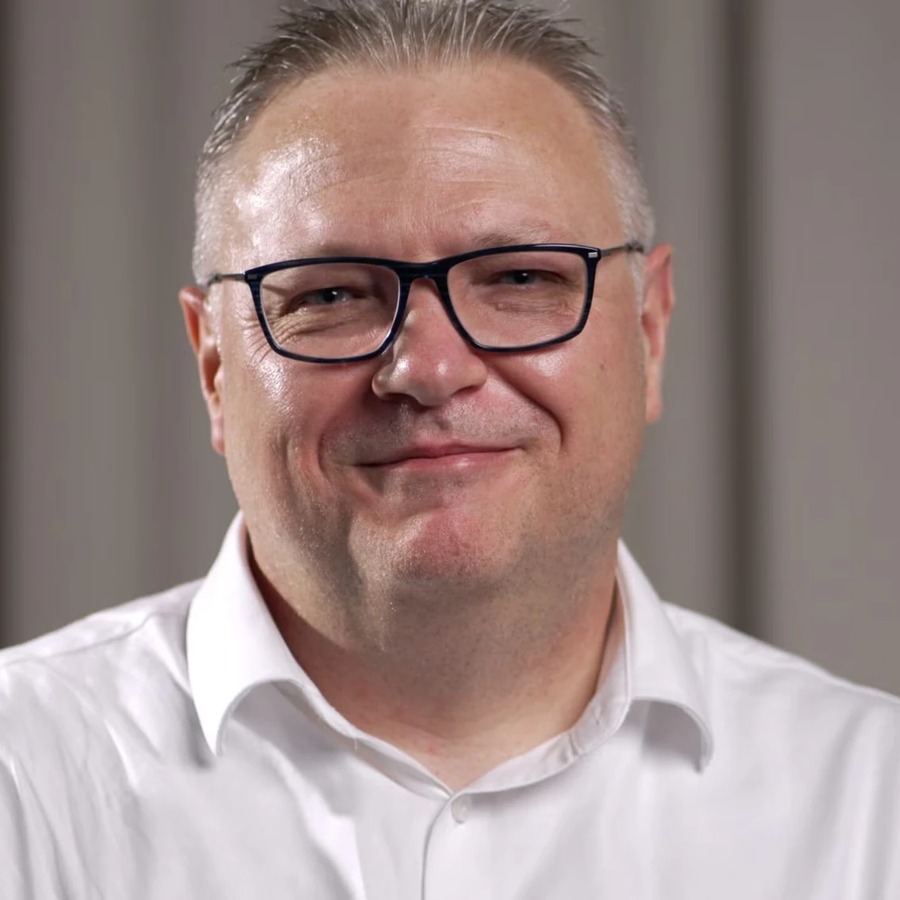
Former Vice President, Operational Excellence, Parexel
Moe: Why was timely data access so hard to solve before automated CTMS transfer?
Ed Fowler: What is very difficult in this industry is getting data in a timely fashion into the hands of sponsors. Without CTMS transfer and other methods of moving that data across, sponsors are relying on reports that can go out of date very quickly — and that leads to escalations on issues that aren’t really there.
Moe: Why does shared infrastructure solve something that custom integrations couldn't?
Ed Fowler: The great thing about both the CRO and the sponsor having a shared infrastructure is that the data really looks the same in both systems. Things are instantly familiar to both sides when they're collaborating on the trial. You speak the same language — things look and sound the same when you're dealing with that data. It just makes the whole experience a lot easier when you're sharing data between the CRO and the sponsor.
Moe: How has the shared platform changed the nature of sponsor-CRO meetings?
Ed Fowler: You're always going to need some meetings to review outputs and make sure the CRO is hitting agreed KPIs and metrics. But the platform limits how many you need and informs you before you walk in. You have the information in your hands already — you can see near real-time updates as things progress on the trial. The meeting becomes a means to talk through things you weren't quite sure about. You still need some of that, but it's on the basis of accurate, near real-time data. That leads to fewer unnecessary conversations than you would have had otherwise.
“You still need some meetings — but it's on the basis of accurate data which is near real time. That leads to less unnecessary conversations that you might have had to have otherwise.”
Moe: How do the time savings actually show up — hours, headcount, decisions?
Ed Fowler: We don't normally measure it in terms of hours — it's not a metric people would typically track. But if you look at how it worked before, you had manually created integrations that needed a lot of maintenance: thousands of hours to create them, to maintain them. And if you went the other route — providing reports — not only did the CRO have to produce, ship, and send them, the sponsor also had to spend time receiving them and unpacking them. And those reports weren't in the same format you'd get with CTMS transfer, where the data comes into the configured UI the sponsor uses day in, day out, and they know exactly what it means. A lot of hours went into that process. It's hard to quantify exactly how many, but it could be in the thousands.
Moe: How does the oversight issue-tracking feature change what a sponsor can show an inspector?
Ed Fowler: There's a feature in the Veeva product on CTMS transfer where the sponsor can put oversight issues directly into their CTMS, and those get sent to the CRO, who can then respond. There is a product update still coming from Veeva — we need to be able to track the CRO's responses to those oversight issues, and I believe that's coming this year, which will make it even better. But the current process is fully audited. The fact that the issue was raised, the oversight issue itself, the CRO response — all of that is audited in the system, and it allows that to be tracked and provides evidence of oversight.
Moe: How are sponsor clinical operations teams using the time they used to spend chasing CRO data?
Ed Fowler: They can focus on what's most important, which is advancing the clinical study — activating sites, making sure patients are enrolled, and making sure patients get the treatment they need. It's a win all round.
“The most important thing is advancing the clinical study — activating sites, making sure patients are enrolled, and making sure patients get the treatment that they need.”
Moe: Why should sponsors still on manual processes stop debating and start moving now?
Ed Fowler: They should really focus on the data that's important to them. Define what oversight means, figure out what data they actually need, and then act on that data. Don't ask for everything — the picture becomes confused. Figure out what you really need for good, solid oversight, make sure that data is transferred in a timely manner, and focus on that.
Moe: How does this position Parexel against other CROs competing for sponsors on the Veeva platform?
Ed Fowler: We are one of the first CROs to use CTMS transfer and adopt the Veeva platform, so we have a lot of experience. We understand how to get this working and how to get it set up. For sponsors who are already on the Veeva platform, that's a very simple integration — very fast to set up, which means we can get working very quickly and start sharing that transparent data. I think that positions us as a strong CRO of choice for sponsors on the Veeva platform.
Ed Fowler is the former Vice President, Operational Excellence, at Parexel.

Moe Alsumidaie, MBA, MSF, is founder and Chief Editor of Vanguard Publications, which publishes Clinical Trial Vanguard, Pharma Vanguard and BullScope, and Head of Research at CliniBiz. He has two decades in clinical trial operations and data science, with earlier roles at Genentech, Abbott Vascular and Stanford University Medical Center, and is a guest lecturer in clinical trial sciences at Rutgers University.