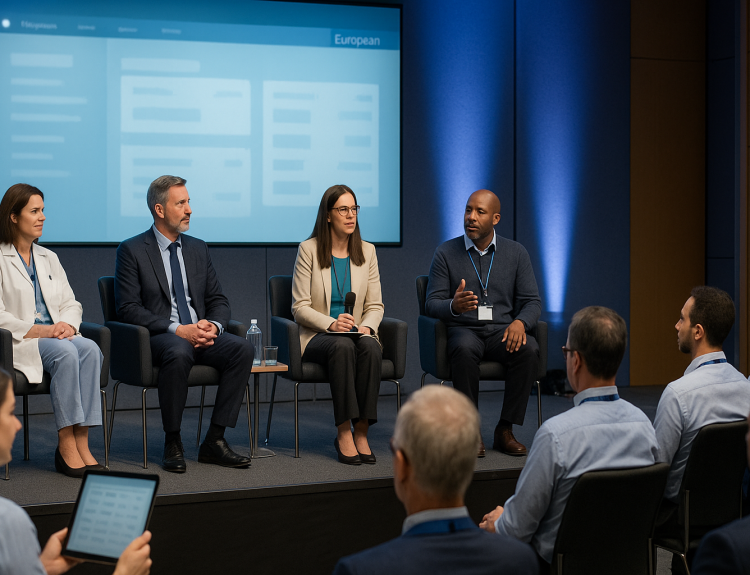
At the 2026 SCOPE Summit, industry veterans and technology leaders convened to address a staggering economic reality: the cost of developing a single new medicine has surged from $802 million in 2010 to over $2.6 billion today. Against this backdrop of escalating financial pressure and regulatory shifts, such as the Inflation Reduction Act, the panel explored the feasibility of radical acceleration—compressing clinical trial timelines from years to months. Featuring experts from AstraZeneca, Merck KGaA/EMD Serono, Amazon Web Services (AWS), and Arsenal Capital Partners, the discussion moved beyond the hype of artificial intelligence to identify practical levers for systemic transformation.
The Economic Imperative and the Chess Opening Strategy
The clinical research ecosystem currently faces a 5% to 10% revenue exposure due to Medicare price negotiations, placing billions of dollars at risk for major pharmaceutical sponsors. To counteract these pressures, the panel argued that meaningful compression requires a minimum 30% to 40% reduction in trial enablement and execution timeframes. Experts suggested that the most significant opportunities for this reduction lie not in the final stages of a study, but in what they described as the opening of the trial process.
The discussion underscored that decisions made during protocol design, site identification, and enrollment readiness have a compounding effect on the downstream timeline. When these initial stages are mismanaged, the resulting errors echo for years, necessitating costly corrections and delays. By treating trial setup as a strategic chess opening, sponsors can utilize data science and AI to optimize these foundational decision levers at scale, ensuring the trial is engineered for success before the first patient is even screened.
Overcoming Technical Debt and Site-Level Fragmentation
Despite two decades of technological advances—ranging from Electronic Data Capture (EDC) to decentralized trial models—the overall drug development timeline has remained stubbornly consistent. Panelists noted that while productivity has increased, the industry has often merely shifted time from one phase of the timeline to another. A central challenge identified was the burden on clinical sites from the tech stack. One speaker illustrated this by describing a large academic institution managing 40 studies where coordinators spent 90% of their day navigating a labyrinth of disparate logins, usernames, and laminated SOP binders, leaving only 10% for patient interaction.
To achieve true acceleration, the experts proposed a shift from independent tech stacks to a more unified, interoperable ecosystem. The Investigator Data Bank was cited as a successful precedent for industry-wide collaboration that improved site selection. Now, the focus is shifting toward macro delegation through AI agents—systems that can handle complex data management and administrative workflows, allowing human investigators to focus on high-touch patient care and micro steering of the clinical process.
Data Intelligence and Privacy-Preserving Collaboration
The conversation highlighted a critical shift in how data is shared and utilized across the industry. AWS representatives emphasized that the primary challenge is no longer just storage, but managing complex datasets to extract insights trapped in silos. New technologies, such as federated learning and data clean rooms, now allow healthcare providers to share the dimensionality and shape of their patient populations without exposing personally identifiable information (PII).
This technical capability enables sponsors to identify where patients are in real time, rather than relying on historical data that may be 6 to 12 months old. Furthermore, next-generation AI foundation models are evolving to model biology at the cellular and population levels. This allows for the simulation of disease-therapeutic interactions a priori, helping to predict which patients will be responders and de-risking the transition from Phase 2 to Phase 3 trials. Even a 3% to 5% improvement in predictive accuracy at this stage can result in significant time and cost savings.
Future Outlook: A Two-to-Five-Year Transformation Window
The panel concluded that, while technology is no longer the primary bottleneck, human and systemic redesign remain the final hurdles. Short-term wins in timeline compression—specifically in trial setup and insight generation—are expected within the next 24 months. However, radical acceleration at the site level will require a fundamental shift in operating models to reduce the administrative burden on clinical staff.
Looking ahead, the experts predicted that the industry is currently at the peak of technical debt and will begin to see a downward slope toward greater efficiency within the next year. The ultimate goal is a turnkey investigator environment where single sign-on access and validated, cross-sponsor tools enable sites to return to their primary mission: patient care. As these AI-driven systems mature, the need for large control arms may decrease, and trial sizes could shrink, signaling a new era of agile, high-velocity drug development.

Moe Alsumidaie, MBA, MSF, is founder and Chief Editor of Vanguard Publications, which publishes Clinical Trial Vanguard, Pharma Vanguard and BullScope, and Head of Research at CliniBiz. He has two decades in clinical trial operations and data science, with earlier roles at Genentech, Abbott Vascular and Stanford University Medical Center, and is a guest lecturer in clinical trial sciences at Rutgers University.