A contactless device, 40 countries, and a design philosophy that starts with patients — not compliance checklists
The question most digital health companies answer last — how do we protect patient data? — is the question Mikesh Udani built Albus Health around first. That sequencing turns out to matter enormously in a sector where pharma sponsors run rigorous vendor due diligence, where patients sleep in the rooms where data is being collected, and where paediatric rare disease studies can hinge on a single question – will the child tolerate seven nights in a sleep lab?. (Spoiler: they won’t.) Albus Health’s tabletop device measures sleep, vital signs, cough, and other symptoms passively and contactlessly — no wearables, no diaries, no clinic visits. It is currently deployed by multiple top-ten pharma companies across more than twenty countries. Udani, the company’s CEO, spoke with Vanguard about what passive monitoring unlocks for trial design, why privacy-by-design is a commercial differentiator, and what it actually means to treat patients as partners in clinical research.
Diana: How does Albus Health’s device work, and why does the contactless approach matter for clinical trials?
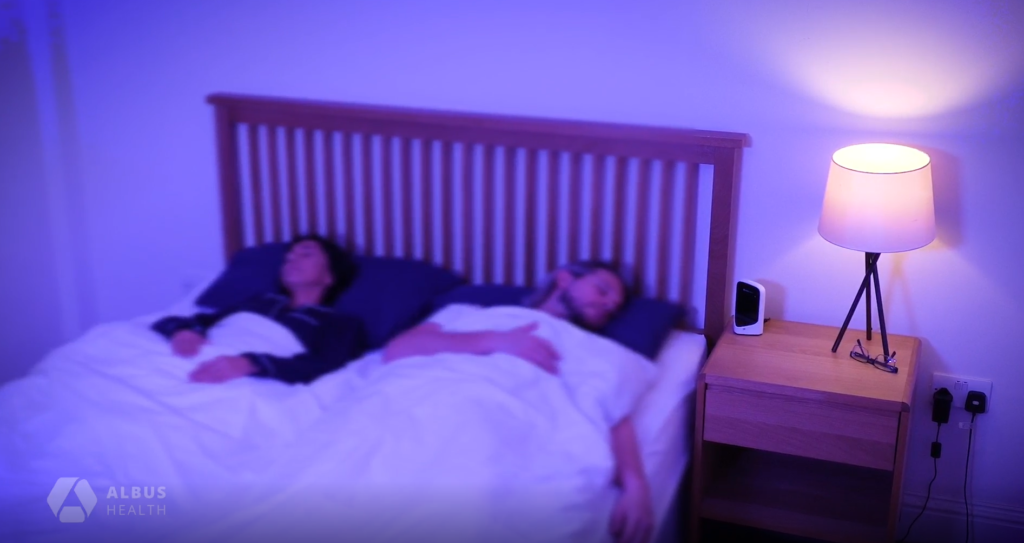
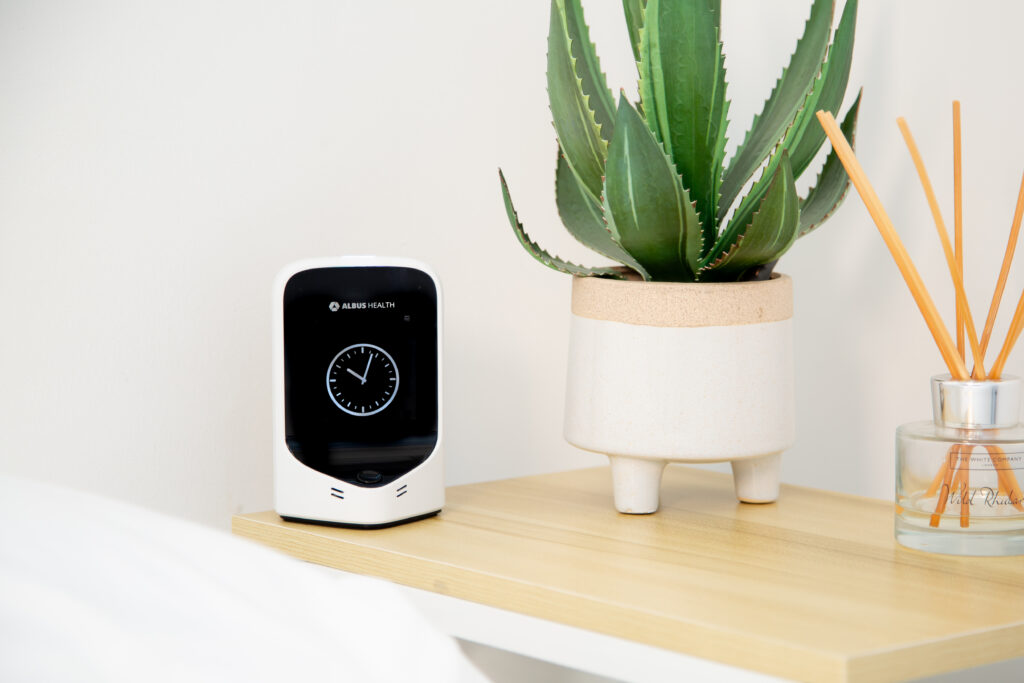
Mikesh Udani: Albus Home measures sleep, vital signs, cough, and a range of other symptoms without patients needing to do or wear anything. It starts with a small tabletop device with specialized motion, acoustic and environmental sensors that sits on the bedside table and passively measures clinically meaningful signals while being privacy-preserving — and while patients go about their lives as normal. The signals go through clinically validated algorithms that extract metrics such as respiratory rate, heart rate, sleep and cough. The product is certified for use in over 40 countries, including in Europe, North America, South America and Asia, and is currently being used by large pharmaceutical companies in their global clinical trials.
Sleep is fundamental to health in many chronic diseases. Nighttime symptoms are known markers of worsening and response to treatment. In respiratory diseases such as asthma and COPD, clinicians have known this for decades — the worse the disease, the more prevalent these symptoms are. They predict clinical emergencies like exacerbations, and they measure recovery and response to treatment. People spend about a third of their day sleeping or in bed, and for patients who are unwell, even more than that. So there is a real opportunity to robustly measure disease burden and the changes related to clinical outcomes — early worsening or treatment response — if we can accurately measure these symptoms at home.
The trouble is that no one is aware of their symptoms during sleep. You and I won’t know if we have a high respiratory rate or heart rate while sleeping, and we can’t accurately recall things like how many times we woke up at night over long periods of time. Patients also don’t like to wear anything when they sleep — particularly children or the elderly, for whom wearing something on their body at night impacts quality of life. To solve this, we developed technology that can measure sleep, respiratory rate, heart rate, coughing, wheezing, and a range of other symptoms without patients needing to do or wear anything. In clinical trials, this helps collect objective data for months and years, which can be used to demonstrate things like response to treatment or safety measures.
Diana: Why does the therapeutic scope extend beyond respiratory disease?
Mikesh Udani: We started with respiratory and have since moved into oncology and rare diseases, and we’re looking to expand into neurological and cardiovascular conditions over the coming months and years. Sleep is quite fundamental to most chronic diseases — even when we have a cold, our sleep gets disrupted. For patients with a chronic disease, sleep is one of the first factors that gets impacted in the vast majority of cases.
Similarly, drugs affect sleep. Some drugs have side effects that disrupt sleep; others improve sleep and thereby lead to better long-term outcomes. Many drugs for neurological conditions such as multiple sclerosis, for example, are going to impact sleep. There’s a two-way relationship: if the disease is worse, sleep gets worse, and if sleep gets worse, the disease gets worse. So it’s a very important element for patients and for drug developers as a result.
Diana: How does passive monitoring change what was previously possible in a trial — specifically in study design?
Mikesh Udani: The monitoring of sleep and symptoms in clinical trials is not adequate today. The most common approach is symptom diaries — patients are asked how they slept over the last week, or how many times they woke up because of symptoms. The challenge is that most people don’t recall this accurately or have poor adherence to filling out questionnaires or diaries. Sometimes you wake up without even realizing it. So while people try to measure with this modality, it leads to missing data, unreliable data, and recall bias. The clinical accuracy of the data is quite low.
The other approach is using medical grade wearable such as polysomnography, which is the gold standard for sleep. But to go through polysomnography, you have to go to a sleep clinic with EEG sensors, a chest band, an abdomen band, a finger probe — sleeping in an environment that isn’t your own. Doing this for several days at a stretch disrupts day-to-day life and prevents people from participating in clinical studies.
We are discussing a clinical trial right now in a pediatric rare disease that severely impacts patient’s sleep, and the drug is likely to cause a significant improvement. They want to measure sleep over multiple weeks. Without devices like Albus Home, it would be very hard to even conduct that study because no child is going to go to a sleep lab for seven nights in a row, and they will struggle to recruit participants. That means the drug doesn’t get to the patients, because the evidence can’t be collected. In another study in Asthma, symptoms need to be monitored for 52 weeks, which is very hard to achieve with any tool that require patients to do or wear anything for all the reasons above.
Remote monitoring technologies like Albus that can measure sleep and other symptoms with clinical accuracy at home remove a huge barrier. They measure things at home which were until now only possible in a clinical setting. By doing that, we’re removing burden from patients, getting drugs to patients faster, and in some cases getting drugs to patients who would otherwise have little recourse. There are also safety elements — in oncology, certain drugs like ADCs have high toxicity effects such as drug induced ILD. If those effects are picked up too late, they have a very detrimental impact on how long patients live. We help pick up early warning signs as soon as they develop, so these patients can be flagged up and receive the necessary downstream assessment and treatment changes to keep survival rates as high as possible.
Before and after — it’s similar to the difference between writing letters and using smartphones. The smartphone saves time, but more importantly, it opens up opportunities that simply weren’t available before. Some things become faster and better. But, a few things become possible that just weren’t possible before.
“We are discussing a clinical trial right now in pediatric rare diseases where they want to measure sleep over a period of seven days. Without Albus, it would be very hard to even conduct this study because no child is going to go to a sleep lab for seven days in a row.”
Diana: How is participant data handled — what is actually collected, and how is it protected?
Mikesh Udani: We never take personal identified data — name, contact details — into the company. All participant symptom-related data is linked to a participant code. At best that data is pseudonymized, and in our hands, in most cases, it’s anonymized — we cannot link the data we hold to an individual.
What we store and transfer is symptom-related information: coughs, wheeze, respiratory rate, heart rate, sleep parameters. Privacy is preserved by design. Patients can be assured that their personal data is always handled in accordance with applicable regulations, including GCP, GDPR, and HIPAA, and is not used by us for purposes outside the studies. Further, all data is encrypted at rest and in transit.
I Everything is traceable and auditable. There are access logs, audit trails, and access is restricted on a need-to-know basis. Even I don’t have access to patient data in the company, because there’s no reason why I should. The storage is very highly gated and our data security standards are aligned with industry best practices, such as ISO27001.
In a pharmaceutical clinical trial, we typically hold data on behalf of the pharma company. Once the study is done, it’s locked and archived for regulatory purposes, and the rest of the symptom data is passed on to the pharmaceutical company.
Diana: How thoroughly do pharma sponsors scrutinize privacy practices before contracting with a vendor like Albus?
Mikesh Udani: This is a core area of due diligence assessment and audit before any pharma company would work with us or put any device close to their patients — and for very good reasons. It extends to the entire data lifecycle, from the moment a data point is generated in a patient’s home right down to the end of the lifecycle when it’s deleted or archived. Data privacy, integrity, and security all need to be maintained to the highest standards. Pharma companies do a very rigorous assessment both of our quality management system containing our processes and policies, as well as the evidence that we adhere to those standards. This is a must-have. Getting it right can certainly be a differentiator from companies that are less established in this area, regardless of how good their technology is.
Without data compliance, I don’t see how one can operate in the life sciences industry, especially when dealing with patient data. And in my opinion, one should not operate in this domain without it. It is a highly regulated industry, and these regulations are intended to protect patients — which is everybody’s responsibility.
I’ll give you an example. We work with multiple top-tier pharma companies. One of them had already cleared our due diligence — we were already vendors — but they wanted to go a step further and assess patient acceptability independently, specifically on the privacy side. They conducted a qualitative study to assess whether patients would want to use the Albus device even when it was an optional element of the study. They asked patients: here is a study, you can participate with Albus or without it — given that choice, would you like to use it? They expected some patients to say no, some to say yes. For the patients who said no, they wanted to understand why. For those who said yes, they wanted to probe further — asking whether, knowing a device was sitting on the bedside table collecting data, they were concerned about privacy, and whether that would change their mind.
What they found was that 100% of participants said they wanted to participate with Albus, even though it was optional. And when actively prompted about privacy concerns, none of them changed their mind. The participants received the design of the device positively and felt it was unobtrusive. What participants said was that they are used to consumer technologies, but what they liked about this tool was that it is being used for clinical research purposes — not to sell something to them. They felt the data was being used to get drugs to patients, and to measure what matters. In fact, 30% of participants in that qualitative study volunteered that if a pharma sponsor was using Albus in a clinical trial, it would cast the sponsor in a positive light — because they were going out of their way to use cutting-edge technology to measure what matters while adhering to privacy.
“Getting data compliance right can certainly be a differentiator from companies that are less established in this area, regardless of how good their technology is.”
Diana: Why do you see privacy regulation as an enabler of innovation rather than a constraint on it?
Mikesh Udani: Those of us who choose to work in health tech choose to put patients at the core of what we do. Their wellbeing and protection is central to what we build. They care about data privacy and protection, so it is our responsibility to build solutions that meet those requirements — even beyond what the regulators ask for.
Regulators are there to protect patients and to ensure that when something is interacting with patients, it is for the patient’s wellbeing. So in their intent, regulators have patients’ best interest at the core.
If you and I were to take a drug, we would be a lot more comfortable if that drug came from a highly regulated industry, through regulated clinical trials, and was approved by a trustworthy regulatory authority — compared to a cheaper, more easily available option that did not come from a regulated industry. We make that judgment for ourselves and for our families. So as consumers and as patients ourselves, we can appreciate the value of regulations.
We think of patient preferences, data privacy, and their protection as an enabler, not a barrier — the same way we think of a user interface design that improves usability as an enabler. We would invest in building an excellent user interface so patients would love using our product. Data protection and privacy work the same way.
At Albus, we didn’t build a solution and then ask patients to use it. We asked patients what they wanted and what their preferences were, and then built the solution. Data protection, privacy, and data control for patients was always at the core of our development from the start — not a wrapper added as an afterthought once the technology was built.
An example of this is the device’s design itself. We wanted the technology to be as easy to use as possible, whether that’s a five-year-old child or a 95-year-old person struggling with dementia. We didn’t want to add any burden beyond what they were already going through because of their disease. So we designed it to be completely automated and plug-and-play. The patient plugs it in, places it on the bedside table, and everything else happens automatically. They don’t need to do or wear anything. They don’t need to change their lives at all. Every single action a patient needs to take is a potential adherence issue — if they have to turn something on or off, put something on their body, or charge something, that’s extra work. The only button we put on the front of the device is a snooze button. Not an on/off button, not an alert button — a snooze button that allows patients to pause recording for a few hours or the entire night if they want to. We put it there because we wanted to give patients further control over their data. And if they’re half asleep, they can just reach out and press it.
Before we built the technology, we spent a lot of time with patients and their families asking what was important to them. Even when we sensed a slight hesitation, we wanted to give them assurance and comfort, and we took all of that into account before we designed anything.

Diana: How does Albus structure its end-to-end service for pharma sponsors?
Mikesh Udani: We provide end-to-end services that support seamless operations and scale in global clinical trials – including protocol support, study setup activities, logistics and shipping for global deployment, training, materials, ongoing study support and monitoring through to study closeout support. We handle all data management and ensure adherence to local and global regulatory requirements. In short, we handle all aspects of deployment, data collection and processing.
Diana: What principles should guide companies building health technology in settings this personal?
Mikesh Udani: The key principle is putting patients first — putting their priorities and preferences, including data privacy, at the core of the design, not as an afterthought. All of this should be considered right at the start, before anything is built, rather than building something and then trying to force it onto patients.
Responsibility and trust are two things I’d recommend keeping in mind. On responsibility: we work in health because in some ways we all feel responsible for patients. As a part of that, we must take into account what is important for them. The simplest thing to do is to ask them — how would you feel about using this product? What would make you feel more comfortable? What if we added a snooze feature? What if none of your personal identified data was collected — would that make you feel better? We followed an iterative development approach with patients, taking their input into account throughout. Building solutions with patients as partners is a core part of the development lifecycle.
On trust: full transparency is essential. Patients should always be clear on how their data is going to be used, what it is going to be used for, and where it is going to be stored. We explain things in plain language, create systems and processes that protect their interest by design and always give them the control over their data that they deserve. These things build trust. Transparency builds trust. Showing patients that you are doing what you’re doing because you care about research and patient benefit, and demonstrating how you are incorporating that into the way you operate — that is what builds trust.
Mikesh Udani is CEO of Albus Health, a digital health company developing passive, contactless monitoring technology for use in clinical trials and clinical care across more than 40 countries.


Diana is the Founder & Managing Director at RD Privacy and a contributing columnist, specializing in privacy for the pharmaceuticals and life science sectors, particularly small biopharma companies, with extensive experience as a European qualified privacy attorney and Data Protection Officer (DPO).